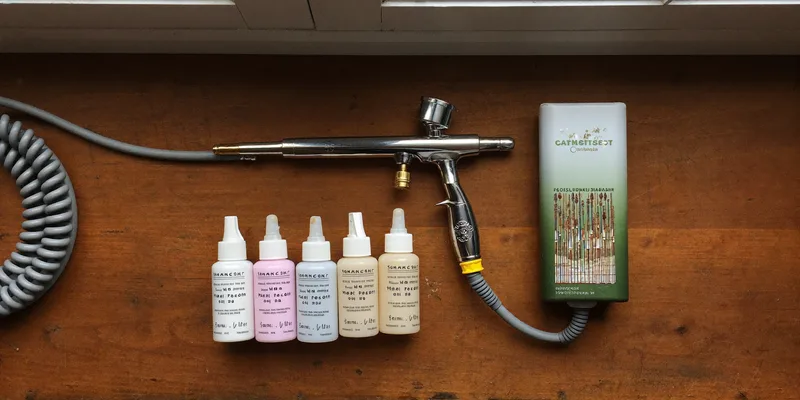
Last updated: August 23, 2026
A starter kit is sold as everything you need, and it almost never is. The box arrives, the airbrush and the compressor are in it, and then you discover on the first evening that you have no cleaner, nothing to spray into, no thinner, and no idea what pressure to set. The hobby stalls before the first model is primed.
This page is the honest shopping list. What belongs in the kit, what the kit will leave out, and which of the missing pieces you genuinely need on day one rather than in month three.
This article contains affiliate links. If you buy through them, we may earn a commission at no extra cost to you. Learn more.
Quick Answer
What should an airbrush starter kit actually contain?
- A gravity feed, dual action airbrush with a 0.3mm nozzle, plus a hose that fits both ends.
- A compressor with a regulator and a moisture trap, not a bare motor with a hose barb.
- Airbrush cleaner and thinner made for the paint you are going to spray.
- Somewhere for the overspray to go, which means at minimum a cleaning pot and an open window.
Bottom line: buy the kit for the brush and compressor, and expect to add cleaner, thinner and a cleaning pot yourself.
The Four Things a Kit Must Get Right
Only four decisions in a starter kit are hard to reverse: the feed type, the trigger type, the nozzle size and whether the compressor has a regulator. Everything else in the box is consumable or replaceable. Get those four right and a modest kit will serve you for years; get them wrong and no amount of accessories helps.
Gravity feed, dual action, 0.3mm, and a regulator with a gauge. If a listing does not state all four plainly, treat the silence as a no.
Why the Regulator Is Non Negotiable
Without a regulator you spray at whatever pressure the compressor happens to make, which is usually far too high for thinned acrylic. Too much pressure turns a smooth coat into a dusty, grainy one and blows paint straight past a 28mm figure. The gauge is how you learn what your paint likes, and you cannot learn it by feel.
What Kits Reliably Leave Out
Most kits ship the hardware and skip the consumables, because consumables are where the seller’s margin is thin and the shipping rules get complicated. The predictable gaps are cleaner, thinner, a cleaning pot, and anything resembling ventilation. Two of those you need on the first evening.
The other common gap is a decent hose. Kits often include a thin vinyl hose that kinks and stiffens, which is annoying rather than fatal, and cheap to replace later.
Cleaner and Thinner Come First
You cannot finish a session without cleaner, and you cannot start one properly without thinner. Buy both before the kit arrives if you can. Vallejo’s cleaner is one of the most widely bought airbrush consumables on the market and is a safe default for acrylics.

A Cleaning Pot Keeps the Mist Off Your Table
A cleaning pot is a jar with a lid and a hole in it that you spray into while flushing. It catches the mist that would otherwise settle on your table, your model and everything else in the room. It is the cheapest quality of life upgrade in the hobby and it belongs in the first order.

Complete Kits Worth Starting On
A complete kit makes sense when you want one box, one delivery and no compatibility guesswork. The two patterns that work are a mid range multi brush set from an established Amazon brand, or a hobby brand bundle aimed at miniature painters. Both get you spraying the day the box lands.
What you are trading away is compressor quality. Kit compressors are usually small and tankless, which is workable but noticeable.
The Multi Brush Route
The Master Airbrush Cool Runner II kit has been the default recommendation in this category for a long time, and it packs three brushes with a tank compressor that includes a drain valve. Three brushes means you can keep primer, basecoat and detail loaded at once, which changes how a painting evening feels.

The Hobby Brand Bundle
Gaahleri’s Ambition bundle pairs a hobby oriented brush with a small compressor and is aimed squarely at miniature painters rather than general craft use. It is a tighter, lighter setup than the three brush kits, and it comes from a brand that stocks spare O rings and nozzles.

Kit or Buy the Pieces Separately
Buy the kit if this is your first airbrush and you are not sure the hobby will stick. Buy separately if you already know you want a specific brush, because that is exactly the situation where a bundled compressor becomes dead weight. There is no third answer that suits everyone.
| Approach | Strength | Weakness | Suits |
|---|---|---|---|
| All in one kit | One order, everything fits | Compressor is the weak link | First airbrush, testing the water |
| Brush plus separate compressor | Each part chosen on merit | Fittings and adapters to check | You already know the brush you want |
| Multi brush set | No cleaning between stages | Three mid grade brushes | Batch painting an army |
| Second hand brush, new compressor | Premium brush within reach | Unknown needle and nozzle wear | Patient buyers who can inspect |
The full compressor decision, including tank versus tankless and what duty cycle means, is in our airbrush compressor guide.
Skip These on the First Order
Three things get bought early and used late: a spray booth, an ultrasonic cleaner and a second airbrush. None of them solve a beginner problem. A booth matters once you are spraying often enough that overspray is a real household issue, and an ultrasonic cleaner only earns its place once you have paint dried into places a brush cannot reach.
Spend that money on paint instead. Running out of colors is what actually stops a first project.
Frequently Asked Questions
Is a beginner airbrush kit good enough for miniatures? Yes for priming, basecoating and zenithal work, which is the bulk of what an airbrush saves you time on. The limits show up in fine freehand and very thin glazes, where atomization at low pressure is what separates budget brushes from mid tier ones.
What pressure should I start at? Set the regulator low and work up. Most miniature painters land somewhere in the low twenties of PSI for thinned acrylic and go higher for primer or when tip dry becomes constant. Our first session walkthrough covers finding your own number.
Do I need thinner if the paint says airbrush ready? Usually still yes, at least a little. Airbrush ready paints are formulated thinner than pot paints, but they thicken in the bottle over time and the right consistency depends on your pressure and nozzle. Keep thinner on the table.
Can I use water instead of airbrush thinner? For a few drops, often yes. As a habit, no, because water dilutes the binder as well as the pigment and encourages tip dry and pooling. See thinning acrylic paint for the difference.
How many airbrushes do I actually need? One. A second becomes useful when you are batch painting and want to skip cleaning between primer and basecoat, which is why three brush kits sell well to army painters rather than to single figure painters.
What is the first upgrade most people make? The compressor, usually to get a tank and a quieter motor. The second is a cleaning pot, and the third is a better hose. The airbrush itself is often the last thing people replace.
The Bottom Line
Judge a starter kit on four things: gravity feed, dual action, a 0.3mm nozzle and a compressor with a regulator and gauge. Assume the box will not include cleaner, thinner or a cleaning pot, and order those alongside it so your first session ends properly instead of with a clogged brush soaking in a saucer. Skip the booth and the second airbrush until you know how often you actually paint. Read next: choosing an airbrush for miniatures if you want to pick the brush on merit, and kits with a compressor for the bundle decision.