Last updated: August 23, 2026
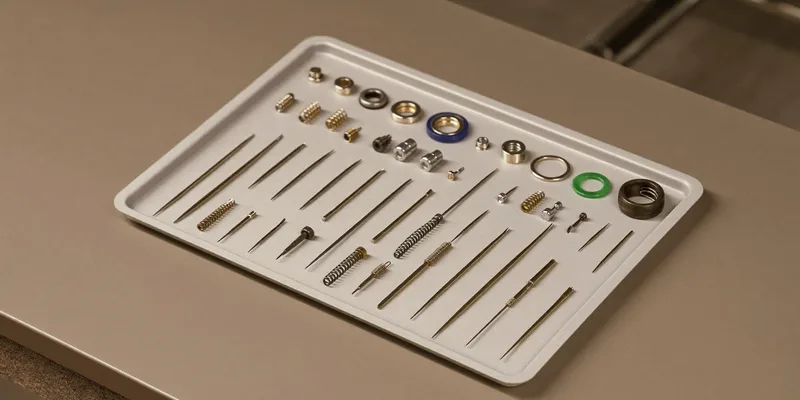
An airbrush is a simple machine with four parts that wear and two that get destroyed by accident. Knowing which is which saves a surprising amount of money, because the difference between a brush that sprays like new and one you are ready to throw away is often a seal that costs less than a pot of paint.
It also saves the opposite mistake: pouring parts into a body that is not worth it. A cheap kit brush with a stripped nozzle thread is finished, and no amount of ordering will fix it. Here is how to tell the two situations apart, and what to keep in the drawer before you need it.
This article contains affiliate links. If you buy through them, we may earn a commission at no extra cost to you. Learn more.
Quick Answer
Which airbrush parts are actually worth replacing?
- Needle: replace it. Bent tips and hooked tips are the most common failure of all.
- Nozzle: replace it if it is cracked or the thread is damaged. Never force one.
- O rings and seals: replace them when air bubbles back into the cup or paint creeps past the trigger.
- Whole brush: replace it when the nozzle seat or the body thread is damaged, or on a kit brush with no parts support.
Bottom line: buy a spare needle and a seal set with the brush. You will need them, and not at a convenient moment.
The Four Parts That Actually Fail
Needle, nozzle, seals and the trigger assembly. That is the whole list for practical purposes. Everything else on a hobby airbrush either lasts as long as the body or breaks in a way that ends the brush. Diagnosing which one you are dealing with takes about two minutes with the thing in pieces.
The order matters too. A brush that has started spitting, spraying unevenly or refusing to shut off cleanly is nearly always telling you about one of these four, and nearly always in that order of likelihood.
Needles: the Part You Will Replace Most
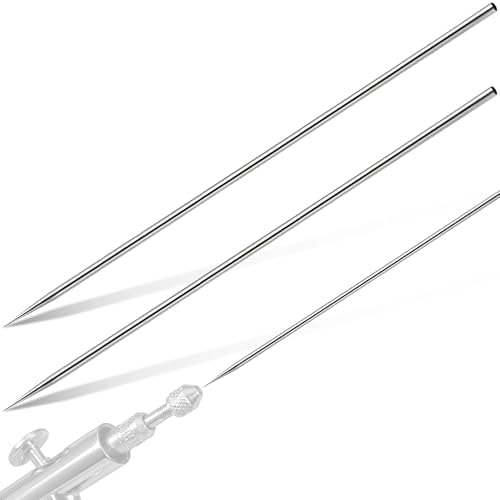
Needles bend. They bend when you pull one back too far and it catches, when the brush is set down on its nose, and when a needle is pushed forward into the nozzle with dried paint in the way. A tip that is bent even slightly sprays off to one side, and a hooked tip drags paint out in blobs.
Straightening is possible and sometimes works, and our guide to the bent airbrush needle goes through it properly. But a needle is a cheap part and a session ruined is not, so keep a spare for the brush you use most. Buy the one that matches your model exactly, since needle tapers are not interchangeable between brands.
Nozzles: Replace, Never Force
Nozzles fail in two ways: they crack, usually from being overtightened, and they clog with cured paint that will not soften. A cracked nozzle draws air where it should not and gives you bubbling in the cup or a spray that will not settle. It cannot be repaired, only swapped.
The rule that saves nozzles is simple: tighten to snug and stop. The threads on these parts are tiny and the material is soft, and every stripped nozzle in the hobby was tightened by someone who thought a little more would help. Our guide to cleaning the nozzle covers how far to go with a reamer before you accept the part is done.

O Rings and Seals
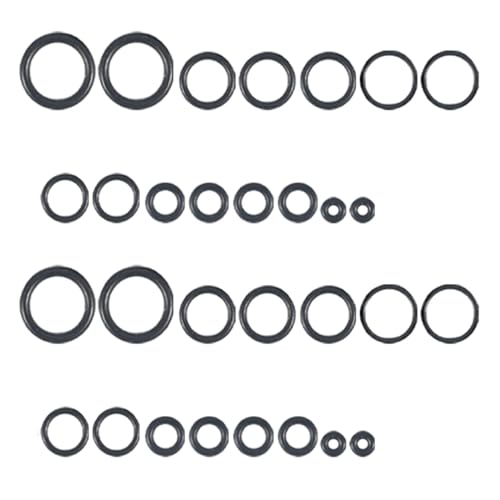
Seals are the quiet failure. They do not break, they swell or harden after repeated solvent exposure, and the symptoms are indirect: air bubbling back into the paint cup, paint creeping toward the trigger, or a trigger that has developed a sticky spot. Painters chase all three for weeks before checking a part that takes a minute to swap.
Solvent based cleaners are the usual culprit, particularly lacquer based products used on brushes not designed for them. If you use those, treat seals as a consumable and keep a set. Many mid range brushes now ship with a spare set and a small tube of lubricant in the box for exactly this reason.
Lubricant, and Where It Does Not Belong
A trace of airbrush lubricant on the needle shaft where it passes through the packing keeps the action smooth and protects the seal. It does not belong anywhere near the nozzle or the tip, where it will contaminate paint and cause fisheyes in your finish. Our maintenance schedule sets out what to do after each session and what to leave alone.

Parts Availability by Brand
This is where brand choice comes back to bite or reward you. The long established names publish exploded diagrams with part numbers and sell every component individually, which means a five year old brush is still serviceable. The marketplace brands vary from decent to nothing at all.
| Brand | Parts channel | What is easy to get | Practical note |
|---|---|---|---|
| Iwata | Dealers and marketplaces | Needles, nozzles, seals, cups | Exploded diagrams with part numbers published |
| Badger | Dealers, brand direct | Needle and nozzle sets, seals | United States manufacturing, service is realistic |
| Paasche | Dealers, brand direct | Full component list, older models included | Old designs stay supported for a long time |
| Marketplace kits | Seller listings only | Needle and nozzle sets, sometimes seals | Support disappears when the listing does |
If you are choosing a brush and you expect to keep it, parts support is a better reason to pay more than any specification on the box. Our brand comparison covers where each name sits on this.
When to Stop Buying Parts
Three situations end a brush. A damaged nozzle seat in the body, because nothing seals against a chewed surface. A stripped thread on the body or the handle. And a cheap kit brush where the needle and nozzle together cost most of what a replacement brush costs, which is a common and slightly absurd situation at the bottom of the market.
There is a fourth, softer one: the brush you have outgrown. If you are replacing parts on a kit brush in order to get finer control, the parts will not deliver it. Put that money toward a body with a better nozzle and keep the old one for primer.
Frequently Asked Questions
How often should I replace an airbrush needle? There is no schedule. Replace it when the tip is bent, hooked or visibly worn, which for most painters is caused by an accident rather than by hours of use. A needle that is straight and polished at the tip is still a good needle.
Are airbrush needles interchangeable between brands? No. Taper, length and diameter are specific to the model, and a needle that nearly fits will seal badly and spray worse. Order by the exact model designation, and check whether your brush uses a different needle for each nozzle size.
My airbrush bubbles in the cup. Which part is it? Usually a loose or cracked nozzle, sometimes the seal behind it. Remove the nozzle, check for a crack under good light, refit it snug without forcing, and try again. If the bubbling continues the nozzle or its seal needs replacing.
Do I need special airbrush lubricant? Use a lubricant sold for airbrushes rather than a household oil, since it needs to tolerate the solvents in your cleaner and stay off your paint. A trace on the needle shaft is enough, and none of it should reach the nozzle end.
Is it worth buying a spare parts kit up front? For a brush you intend to keep, yes. A spare needle and a seal set are inexpensive and they turn a ruined evening into a five minute pause. For a cheap kit brush, buy the spares only if they are a small fraction of a replacement.
The Bottom Line
Keep a spare needle and a seal set for whichever brush you use most, tighten nozzles to snug and no further, and lubricate the needle shaft rather than the tip. Those three habits cover the overwhelming majority of airbrush faults that people mistake for a worn out tool. When the nozzle seat or a body thread is damaged, stop spending and buy a brush with real parts support instead. Read next: needles and nozzles explained and a maintenance schedule that actually gets followed.