Last updated: August 23, 2026
You pulled the needle out to wipe it, felt it catch on something, and now the spray fans off to the left and paint keeps creeping onto the tip. Or you knocked the brush off the table and it landed nose down. Either way the needle is bent, and the tip that does the work is the part that gives first, because it is the thinnest.
The good news is that a lot of these are recoverable and none of them require a new airbrush. The bad news is that the internet is full of advice about rolling needles under pliers, and some of that advice will finish off a needle that could have been saved. Here is the order that actually works, starting with the parts that cost nothing.
This article contains affiliate links. If you buy through them, we may earn a commission at no extra cost to you. Learn more.
Quick Answer
Can you straighten a bent airbrush needle?
- A slight hook at the very tip, yes. Polish it back with fine abrasive and a rolling motion.
- A visible bend along the shaft, usually not. Steel that has yielded once will not return true.
- Never straighten it by squeezing with pliers. That flattens the taper and ends the needle.
- Test with a roll on glass before and after, because your eye will lie to you about a taper this fine.
Bottom line: repair the tip, replace the shaft. A needle is a consumable and forcing a bad one costs you a nozzle.
How to Tell How Bad It Is
Roll it on glass. Lay the needle on a flat pane or a mirror, put a finger on the thick end, and roll it slowly toward you. A straight needle rolls silently with the tip tracking in a line. A bent one lifts, and you will see a gap of light appear and disappear under the tip once per rotation.
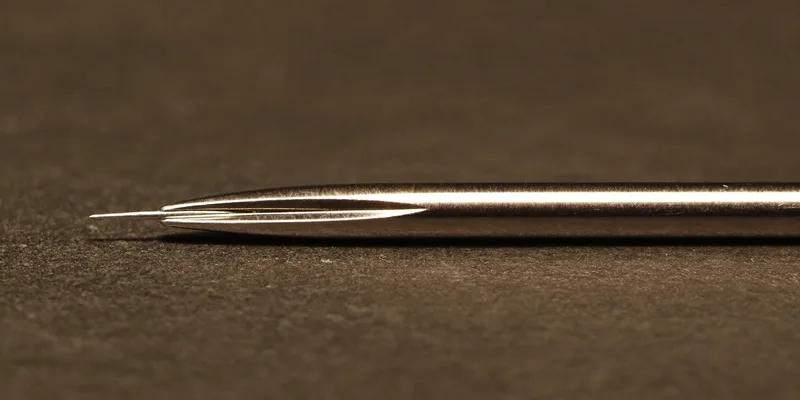
Then look at the tip itself under strong light, ideally with a phone camera zoomed all the way in. What you are looking for is a tiny hook, like the end of a fish hook, at the last part of the taper. That hook is what drags paint and throws the spray off center, and it is the damage that is worth repairing.
Three Grades of Damage
A hooked tip with a straight shaft is repairable. A tip that is snapped clean off is not, because the taper is gone and no polishing brings it back. A shaft bent anywhere along its length is technically straightenable and practically not worth the attempt, since the steel will never sit true in the seal again.
How It Happens, So It Stops Happening
Almost always during cleaning or reassembly rather than during spraying. The three big causes are pushing the needle forward into a nozzle that still holds dried paint, pulling it fully out through the back past the seal and catching it on something, and setting the brush down where it can roll off the table.
The fix for all three is procedural. Always withdraw the needle backward, never push it through a dirty nozzle. Loosen the chuck before you move the needle at all. And use a holder so the brush sits nose up between colors instead of rolling toward the edge of the desk.
The Free Fixes, in Order
Work through these before ordering anything, because a hooked tip is the most common version of this problem and it responds to about two minutes of careful work. Nothing here requires a tool you do not already have on the table.
First, clean the needle completely, because dried paint on the taper looks exactly like a bend and disappears with a wipe. Second, roll it on glass to confirm what you actually have. Third, if the shaft is straight and only the tip is hooked, polish it as described below. Fourth, refit it, loosen the chuck, seat the needle gently forward until it stops on its own, then tighten. Do not push it home with force.
Polishing a Hooked Tip
Lay a strip of very fine abrasive paper or a leather strop on the table with a drop of polishing compound. Hold the needle at a shallow angle, roll it between finger and thumb, and draw it toward you across the surface so the whole taper turns as it travels. You are removing a fraction of steel and restoring the cone, not sharpening a pencil, so a handful of passes is plenty. Check the tip in the camera after every few passes.
What Not to Do
Do not squeeze the needle with pliers to bend it back. The jaws are harder than the needle and they flatten the taper into an oval, which cannot seal in a round nozzle even if the shaft ends up perfectly straight. This is the single most common way a repairable needle becomes scrap.
Do not force a needle into the nozzle to test the fit either. If the needle is bent, pushing it forward transfers the load into a brass or steel cone that costs more than the needle does, and now you have two parts to buy instead of one. Our guide to airbrush needles and nozzles explains why the two always fail as a pair.
Repair or Replace
The decision comes down to where the damage sits and how fine your work is. Somebody spraying primer and basecoats will get away with a tip that is very slightly imperfect. Somebody pulling freehand lines at small scale will notice a fault that does not even show on glass.
| What you have | How it sprays | Repairable | What to do |
|---|---|---|---|
| Paint dried on the taper | Tip dry that returns instantly | Not damage at all | Clean and retest |
| Small hook at the tip | Drifts off center, drags paint | Usually yes | Polish with fine abrasive |
| Tip snapped off | Will not shut off, floods | No | Replace the needle |
| Bend along the shaft | Sticky trigger, leaks past the seal | In theory only | Replace the needle |
Buying the Replacement
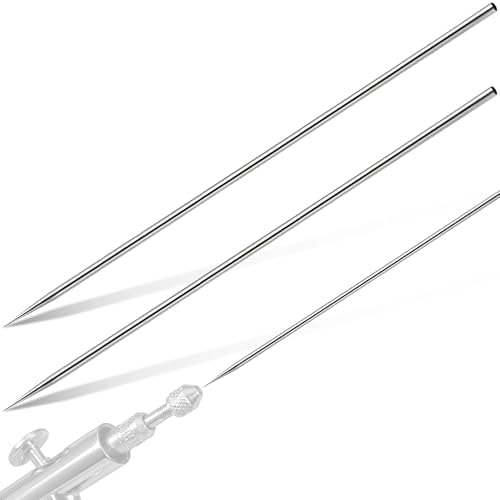
Order by brush model and by the item number on the manufacturer’s parts diagram, not by size alone. Needles of the same stated diameter differ in length and taper between models, and a near fit will seat wrong and leak paint back into the body, which turns a five minute swap into a strip down.
If you own a brush you use hard, buy two. Needles arrive in a slim tube that lives in a drawer forever, and the second one is what keeps a Sunday evening session going. Multi packs exist for the widely sold budget brushes and are the cheapest insurance in the hobby.


Frequently Asked Questions
My airbrush sprays to one side. Is that always a bent needle? Not always, but it is the first thing to check. A hooked tip, a partially blocked nozzle and a nozzle that is not seated square all produce an off center fan. Clean everything, roll the needle on glass, then reseat the nozzle before assuming the worst.
Can I sand a needle with regular sandpaper? Only very fine grades, and only with a rolling motion so the taper stays round. Coarse paper leaves scratches that hold paint and make tip dry worse than the original hook. Fine abrasive with compound on a leather strop gives a better result with less removal.
How much does a bent needle affect fine lines? Enough that you will feel it before you see it. Paint creeps onto the deformed tip, the line thickens partway through the stroke, and you compensate by moving faster, which makes it worse. If detail is your main use, replace rather than repair.
Why does my needle keep bending? Look at how you are pushing it home. If the needle is going forward into a nozzle with dried paint in it, it will bend again every time. Clean the nozzle first, always seat the needle with the chuck loose, and let it stop by itself rather than pushing. Our guide on how to clean an airbrush covers the safe order.
Is a bent needle why my airbrush is not spraying at all? It can be, if the tip snapped and jammed in the nozzle, but a total stoppage is more often dried paint or a stuck needle. Work through the free checks in our guide to an airbrush not spraying paint before ordering parts.
The Bottom Line
Diagnose with a roll on glass and a zoomed phone photo, repair a hooked tip with fine abrasive and a rolling motion, and replace anything bent along the shaft rather than fighting it. Pliers are what turn a fixable needle into a bin item, and a needle forced into a dirty nozzle takes the nozzle with it. Read next: how needles and nozzles fail together and which airbrush cleaner keeps paint off the taper.