Last updated: August 23, 2026
Cleaning is the part of airbrushing nobody puts in the promotional video. You spend twenty minutes putting paint on a model and then longer than that at the sink, and the first question every new owner asks is whether that is normal. It is. The second question is whether the bottle of dedicated cleaner is worth buying when there is a bottle of alcohol in the bathroom cabinet.
That one has a more useful answer. Airbrush cleaner is a cheap consumable that protects an expensive tool, and the differences between the popular bottles are real but small. What matters much more is which family of cleaner you buy, and what you avoid putting through the brush entirely.
This article contains affiliate links. If you buy through them, we may earn a commission at no extra cost to you. Learn more.
Quick Answer
Which airbrush cleaner should you buy?
- Water based acrylics: a water based cleaner such as Vallejo or Medea handles everything you will meet.
- Lacquer or solvent paint: you need a solvent cleaner, and it needs the ventilation its safety data sheet specifies.
- Buy the large bottle. You use far more of this than you expect, and the small ones run out mid clean.
- Skip household cleaners. Anything that attacks rubber seals costs more than the bottle saved.
Bottom line: match the cleaner to the paint family, not to the airbrush brand, and keep a big bottle within arm’s reach of the bench.
What a Cleaner Does That Water Cannot
Three things. It breaks down cured acrylic film rather than just diluting wet paint, it carries pigment out of the crevices where water leaves a stain, and most formulations leave a light lubricating residue that helps the needle move in the seal. Water does the first job badly and the other two not at all.
That is why a brush flushed only with water works fine for a while and then gradually stiffens. Pigment builds in the nozzle threads and behind the needle packing, the trigger gets heavy, and the spray pattern drifts. Cleaner is what stops the slow accumulation rather than the visible mess.
The Two Families: Water Based and Solvent
Water based cleaners handle water based acrylics and most alcohol based hobby paints. They smell mild, they rinse away, and they are safe on the seals in any standard airbrush. For the overwhelming majority of miniature and model painters, this is the only family they ever need.
Solvent cleaners handle lacquer and enamel, dissolve dried films that water based products only soften, and come with the handling requirements of a solvent product. The manufacturer’s safety data sheet is the authority for each one, and it will tell you the ventilation and protection the maker considers appropriate. They are also harder on rubber seals, which is a maintenance cost rather than a reason to avoid them.
Vallejo Airbrush Cleaner: the Default
Vallejo’s Airbrush Cleaner, catalog number 71.099, is the bottle most miniature painters end up with, and it is consistently one of the highest rated consumables in the whole airbrush category. Vallejo describes it as removing paint and lubricating the mechanism without damaging the airbrush, which is exactly the combination you want between colors.
It is a water based product, so it is mild in the room and rinses easily, and it works on Vallejo’s own acrylics as part of a matched system with their thinner. The one criticism owners raise is bottle size: the standard bottle disappears quickly once you start flushing between every color, so the larger size is the better buy if it is available.

Medea Airbrush Cleaner: the Big Bottle
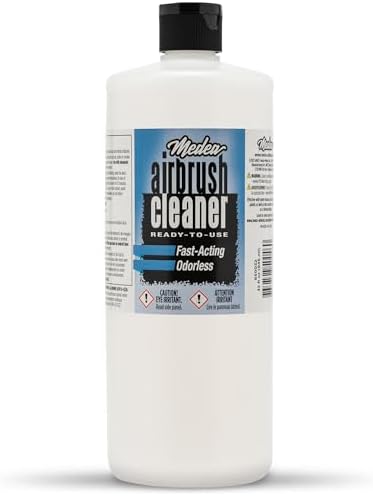
Medea, sold under the Anest Iwata-Medea name, is the other consistently top rated option and comes in genuinely large bottles including a 32 ounce size. Iwata describes it as a mild general purpose cleaner suitable for airbrushes, bristle brushes and technical pens, which is a fair description of how it behaves.
If you paint often, the large bottle changes your habits for the better, because you stop rationing cleaner. Plenty of painters decant it into a small dropper bottle for the bench and keep the big one under the sink. It is the pragmatic choice for anyone flushing several times a session.
Airbrush Cleaners Compared
The practical differences come down to family, bottle size and what they are hard on. Ratings across the popular water based options sit close together, so the deciding factor is usually what paint you spray.
| Cleaner | Family | Suits | Watch out for |
|---|---|---|---|
| Vallejo 71.099 | Water based | Vallejo and other acrylics | Small bottle runs out fast |
| Medea | Water based | Acrylics, general cleanup | Mild on heavy dried film |
| Master Airbrush | Water based | Budget everyday flushing | Often needs a longer soak |
| Tamiya cleaner | Solvent based | Dried acrylic, enamel, lacquer | Hard on rubber seals, needs venting |
What Not to Put Through Your Airbrush
Household cleaners are the recurring mistake. Oven cleaner, drain products and general purpose degreasers will certainly remove paint, and some of them will also attack the seals, the plating and any plastic in the cup. The tool costs many times what a proper bottle of cleaner costs.
Windshield washer fluid and glass cleaner come up constantly as budget alternatives, and they do dissolve some acrylics. They are also unpredictable in composition between brands and regions, and they do nothing for the lubricating side of the job. If you want a cheap flush between colors, use water or a matched thinner and save the real cleaner for the end of the session.

Smell, Ammonia and the Room
Some water based airbrush cleaners include ammonia, which is what you are smelling when a mild cleaner still makes you turn your head away. It is effective on cured acrylic, which is why it is in there. The manufacturer’s safety data sheet lists what is actually in the bottle you bought and what handling the maker recommends.
The practical consequence at a hobby bench is airflow rather than alarm: clean where you paint, with the same window open or the same booth running, and cap the bottle when you are not using it. If you are switching to solvent cleaners for lacquer work, the ventilation requirement steps up and the safety data sheet becomes required reading. Our airbrush ventilation page covers the room setup.
How Much You Actually Use
More than you think, and this is the most common budgeting mistake. A proper end of session clean uses several cup loads: one to flush the bulk, one or two backflushed, and a final one that comes out clear. Multiply that by every color change and a small bottle lasts weeks rather than months.
That is the argument for the large bottle, and also the argument for a cleaning pot, which contains the spray and lets you flush without misting the room. Our guides to the airbrush cleaning pot and the full cleaning routine cover how the two work together.
Frequently Asked Questions
Can I use isopropyl alcohol instead of airbrush cleaner? It works on many acrylics and a lot of painters use it for routine flushing. It does not lubricate, it can be harsh on some seals at high concentration, and it struggles with fully cured film. Using it between colors and a proper cleaner at the end of the session is a reasonable compromise.
How often should I use cleaner rather than water? Water or thinner between similar colors, cleaner at every color family change and at the end of every session. The point of the cleaner is to stop the slow buildup behind the needle and in the nozzle threads, and that buildup happens whether or not the brush still sprays acceptably.
Do I need a different cleaner for lacquer paint? Yes. Water based cleaners will not properly remove a lacquer film, so you need a solvent cleaner matched to the paint. That brings the handling requirements in the product’s safety data sheet with it, and it is harder on standard rubber seals, so keep spares.
Is airbrush cleaner safe on chrome plated parts? Water based cleaners are generally fine. Solvent cleaners and long soaks are where plating and seals suffer, so follow the times on the bottle rather than leaving parts submerged overnight. Never soak an entire airbrush body with the seals still in it.
What is the cheapest way to keep an airbrush clean? Flush immediately, every time, before anything dries. A brush cleaned while wet needs very little cleaner. Most of the expensive, aggressive cleaning people do is recovery work from paint that was allowed to cure inside the tool, and that is entirely avoidable.
The Bottom Line
Buy a water based cleaner in the largest bottle you can find if you spray acrylics, and add a solvent cleaner only when you move to lacquer, with the ventilation its safety data sheet calls for. Skip household products entirely, because the seals in your airbrush cost more to replace than any saving. Read next: how to clean an airbrush and our comparison of Vallejo versus Medea cleaner.