Last updated: August 23, 2026
These two bottles sit next to each other on every hobby shop shelf and at the top of every airbrush cleaner search, and they are both genuinely good. That makes the comparison harder rather than easier, because there is no bad option to eliminate and the marketing copy on both is nearly identical.
The real differences are practical: how much you get in a bottle, how the cleaner behaves on cured paint rather than wet paint, and how strongly it announces itself in a room where other people live. Those three things decide it for most painters, and they point in different directions depending on how you work.
This article contains affiliate links. If you buy through them, we may earn a commission at no extra cost to you. Learn more.
Quick Answer
Vallejo or Medea airbrush cleaner: which should you buy?
- Vallejo if you already spray Vallejo paint. It is part of a matched system with their thinner.
- Medea if you flush constantly, because the large bottle changes how freely you use it.
- Both are water based, both are mild, and both are consistently among the highest rated consumables in the category.
- Neither will remove a properly cured lacquer film. That needs a solvent cleaner.
Bottom line: you cannot buy the wrong one. Match the brand to your paint if you care about the ecosystem, otherwise buy whichever comes in the bigger bottle.
The Short Version
Both are water based, mild smelling general purpose cleaners aimed at acrylic paint, and both do the routine job well. Vallejo’s advantage is integration with its own paint and thinner. Medea’s advantage is bottle size, which sounds trivial until you notice how much cleaner a proper end of session flush actually consumes.
Ratings for the two sit close together and have done for years, which is a more useful signal than any individual review. When two products in the same category stay at the top for that long, the differences that remain are about fit with your workflow rather than quality.
Vallejo 71.099: What It Is Good At
Vallejo describes its Airbrush Cleaner as removing paint and lubricating the mechanism of the airbrush without damaging it, and that lubricating element is the part owners tend to notice. Brushes flushed regularly with it keep a smooth trigger action rather than gradually stiffening, which is exactly what you want from a cleaner used several times a session.
It also sits inside a system. If you already own Vallejo Model Air and Vallejo thinner, the cleaner is formulated around the same acrylics and there is no chemistry to think about. That coherence is genuinely the strongest argument for the brand, and it applies to their thinner as much as their cleaner.

Medea: What It Is Good At
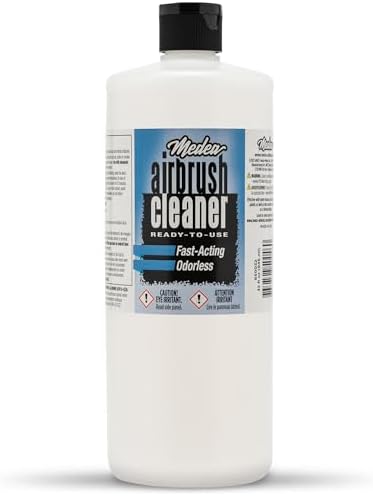
Volume and versatility. Anest Iwata-Medea describes its cleaner as a mild general purpose product suitable for airbrushes, bristle brushes and technical pens, and the 32 ounce bottle is the largest of the mainstream hobby options by a clear margin.
That size changes behavior. Painters with a small bottle ration cleaner and skip flushes. Painters with a large bottle decant into a dropper for the bench and flush whenever the color changes, which is the habit that actually keeps a brush healthy. If you paint most weeks, the bigger bottle is the more useful product regardless of any formulation difference.
Bottle Size and Cost Per Flush
A proper end of session clean uses several cup loads, and a color change flush uses one or two. Multiply that across an evening and the small bottles empty faster than new owners expect. Cost per bottle is the wrong measure here; cost per flush is what you feel.
On that measure the large format bottles win comfortably, whichever brand they carry. Vallejo sells a larger size alongside the standard one and it is the better buy if your shop stocks it. Where only the small bottle is available, the Medea 32 ounce format is the practical answer for a regular painter.

Head to Head
The rows that actually differ between the two are short, which is the honest summary of this comparison.
| Factor | Vallejo 71.099 | Medea | Who it favors |
|---|---|---|---|
| Largest common size | Mid size bottle | Large 32 oz bottle | Frequent painters, Medea |
| Ecosystem fit | Matches Vallejo paint and thinner | Brand agnostic | Vallejo users, Vallejo |
| Lubricating feel | Noted by owners | Milder, more general | Daily flushers, Vallejo |
| Other tools | Airbrush focused | Also brushes and pens | Mixed media, Medea |
Smell and the Room
Both are mild compared with any solvent cleaner, and both still have a noticeable smell when you flush a cup through into an open pot. Some water based airbrush cleaners include ammonia, which is usually what people are reacting to, and the manufacturer’s safety data sheet lists what is in the bottle you bought.
Practically, clean where you paint and with the same ventilation running. A cleaning pot with a working filter lid contains most of the mist, and it is the accessory that makes cleaning at a shared table acceptable to the rest of the household. Our cleaning pot guide covers what to look for.
Diluting Cleaner: Does It Work?
Many painters cut their cleaner with water for routine flushing and save it full strength for the end of the session. It works, it stretches the bottle, and it is a reasonable habit if you flush between every color. The dilution does reduce how well it lifts anything that has begun to dry.
What does not work is treating diluted cleaner as a substitute for the full strength clean at the end of the night. The residue that builds behind the needle packing needs the real thing. Dilute for convenience during the session, then finish properly. The full routine is in our guide to cleaning an airbrush.
Which to Buy for Your Paint
If you spray Vallejo Model Air, Game Air or Citadel Air, either cleaner handles them and the Vallejo bottle has the mild edge of a matched system. If you spray a mix of brands, or you also use bristle brushes and other tools, Medea’s general purpose framing fits better.
If you spray Tamiya acrylics or anything lacquer based, neither of these is the whole answer. Both will handle wet paint, but a cured lacquer film needs a solvent cleaner, with the ventilation the product’s safety data sheet requires. Our Tamiya airbrush cleaner review covers that side.
Frequently Asked Questions
Is Vallejo airbrush cleaner better than Medea? Not meaningfully. Both are water based, mild and highly regarded, and the differences are bottle size and ecosystem fit rather than cleaning power. Buy Vallejo if you already use their paint, buy Medea if you want the large bottle, and expect similar results either way.
Can I use these cleaners on lacquer paint? Only while it is still wet. Neither water based cleaner reliably removes a cured lacquer film, which needs a solvent product. Keep a solvent cleaner for that job, use it with the ventilation its safety data sheet specifies, and remember it is harder on rubber seals.
Can I dilute airbrush cleaner with water? Yes, and many painters do for routine flushing between colors. It stretches the bottle without much downside. Use it full strength for the end of session clean, because diluted cleaner is noticeably weaker on paint that has started to set in the channel.
Will either cleaner damage my airbrush? Neither should, in normal use. Both are formulated for airbrushes and Vallejo explicitly positions its cleaner as safe for the mechanism. The damage in this hobby comes from household products and from soaking a complete brush with its seals in place, not from a proper hobby cleaner.
Which one smells less? Reports vary and both are mild by hobby standards, so the honest answer is that neither is offensive and both are noticeable in a small room. If smell is your deciding factor, the more effective change is a cleaning pot with a filter lid rather than a different bottle.
The Bottom Line
This is a comparison with no loser. Vallejo integrates neatly with its own paint and thinner and has the lubricating reputation, Medea comes in the bottle size that changes how freely you flush. Buy on ecosystem or on volume, and keep a solvent cleaner separately for lacquer work. Read next: our airbrush cleaner overview and the cleaning routine itself.