Last updated: August 23, 2026
There is a specific kind of paralysis that hits before your first airbrush. One forum thread says anything under a certain brand is a waste of money, the next says a cheap one taught them everything, and the search results are full of devices that have nothing to do with painting a 28mm figure at the kitchen table. Meanwhile the gray plastic army sits on the shelf where it has been for two years.
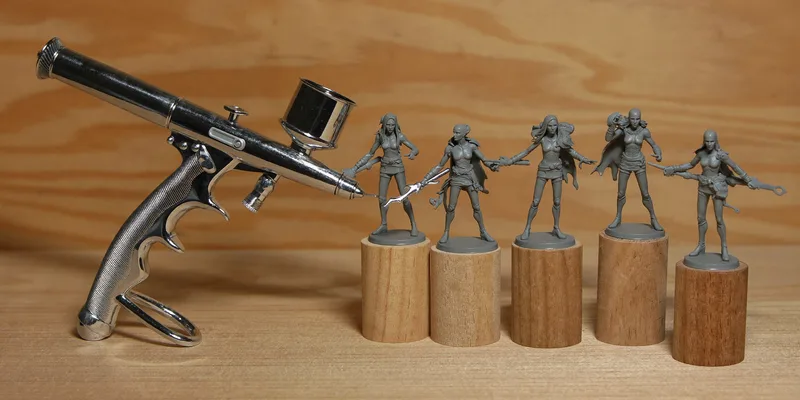
Miniature painting is the easiest airbrush job to buy for, because the requirements are narrow. You are spraying thinned acrylic through a small nozzle at low pressure onto something the size of your thumb. That rules out most of the internet and leaves a short, honest ladder of options.
This article contains affiliate links. If you buy through them, we may earn a commission at no extra cost to you. Learn more.
Quick Answer
Which airbrush should you buy for miniatures?
- A gravity feed, dual action airbrush with a 0.3mm nozzle covers priming, basecoating and most detail work.
- Starting out and unsure the hobby sticks: a modular budget brush from a hobby brand, not a no-name kit.
- Painting weekly and frustrated by atomization: step up to a mid tier German or Japanese brush.
- Fine freehand and thin glazes only: consider a 0.2mm, and keep the 0.3 for primer.
Bottom line: the compressor and your thinning habits decide more about your results than the brush does.
What Miniatures Actually Ask of an Airbrush
Very little, mechanically. Miniature work is thinned acrylic at low pressure over short bursts, with frequent color changes and frequent cleaning. That means you want a gravity feed cup you can flush in seconds, a dual action trigger so you can dial paint flow down for a glaze, and a nozzle small enough for a 28mm shoulder pad without clogging on primer.
What you do not need is high airflow, a large paint reservoir, or a heavy duty needle built for automotive clear coat. Those specifications belong to a different hobby and they are the reason so many search results feel wrong.
Atomization Is the Word That Matters
Atomization is how finely the airbrush breaks paint into droplets. Good atomization lands as a smooth coat; poor atomization gives a grainy finish that looks fine in the hand and terrible in a photograph. It is the quality difference you feel when you move up a tier, and technique alone will not fix it.
The Upgrade Ladder, Rung by Rung
Miniature airbrushes sort into four honest tiers, and each rung buys you one specific thing rather than a general sense of quality. Knowing what the next rung adds is the difference between a smart upgrade and an expensive one. Nobody needs to climb all four.
The order below runs from first airbrush to last. Most painters stop somewhere in the middle and stay there for years, which is a perfectly good outcome.
Rung One: A Modular Budget Brush
The entry rung is where hobby brands, rather than generic sellers, have changed the picture. Gaahleri in particular now shows up repeatedly across the miniature airbrush listings, and the GHAD-39 is the one most people meet first. Reviewers describe it as spitting slightly on start up and then laying down genuinely fine lines, with the practical advantages being that it comes apart easily and ships with spare O rings and lube. Note that Gaahleri lists the GHAD-39 with 0.35mm and 0.5mm needle and nozzle sets rather than the 0.3mm size mentioned above; for miniature work the 0.35mm setup fills the same role.

Rung Two: The Refined Budget Brush
The Mobius sits a step above in the same family with a 0.3mm setup and a smoother trigger action. This is the rung that suits someone who already knows they enjoy airbrushing and wants to stop fighting the tool, without committing to a premium brand. Owners consistently say the same thing about this tier: it is not as forgiving as a European brush, but it is easy to strip and rebuild.

The Premium Rungs and What They Buy
Moving into Harder and Steenbeck or Iwata territory buys three concrete things: noticeably better atomization at low pressure, a trigger with finer control over the first millimeter of travel, and a parts supply that will still exist in ten years. It does not buy you skill, and it will not rescue badly thinned paint.
Both brands are genuinely available through Amazon as well as hobby dealers, so you are not forced into a specialist order. Check the specific model before buying, because dealer only variants exist.
Harder and Steenbeck Ultra
The Ultra is the usual first German brush. It is deliberately simple, with fewer parts to lose, and it takes the same needles and nozzles as its bigger siblings. Search interest in the current Ultra has climbed sharply, which matches what you see in miniature painting circles: it has become the default recommendation for someone who wants a real upgrade without going to the top of the range.
Iwata Eclipse HP-CS
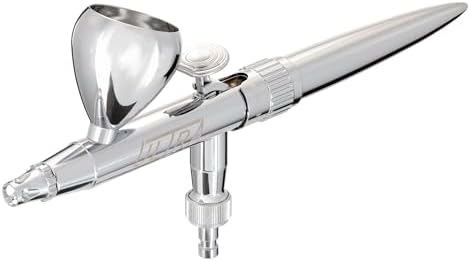
If you ask a forum what to buy once and never replace, the Eclipse HP-CS is the answer that comes back most often. It runs a 0.35mm nozzle, which sounds large for miniatures and is not, because it handles primer and metallics without complaint while still pulling thin lines. Search volume for it has risen dramatically, largely because it keeps getting recommended as the last airbrush a miniature painter needs to buy.

If You Want Three Brushes for the Price of One
There is a real case for a multi brush set when you paint in batches. Keeping one brush loaded with primer, one with your main basecoat and one for detail saves the cleaning cycle between every stage, which for many painters is the part of the hobby that actually causes burnout. The Master Airbrush G233 set is the common answer here.
The trade off is honest: three mid grade brushes atomize like mid grade brushes. But three nozzle sizes in one box, from a brand with a long review history, is a sensible way to find out which size you actually reach for before you spend more.

Nozzle Size for 28mm and 32mm Figures
A 0.3mm nozzle is the default for miniatures and there is very little argument about it. It sprays thinned acrylic reliably, handles most primers, and pulls a line fine enough for camouflage patterns and freehand on a shoulder pad. A 0.2mm gives finer control and clogs faster; a 0.5mm is for terrain and large scale work.
If you own one airbrush, make it a 0.3 or 0.35. Our nozzle size guide goes through the sizes properly, including which brands let you swap the nozzle rather than buying a second brush.
Miniature Airbrushes Compared
Four options across the range, sorted by the difference that actually decides between them rather than by specification. Nozzle sizes are the figures the manufacturers print on their own listings, and the last column is the honest reason each one gets bought. Read it as a shortlist, not a ranking.
| Airbrush | Nozzle | What it is good at | Buy it if |
|---|---|---|---|
| Gaahleri GHAD-39 | 0.3mm | Easy stripping, spares in the box | First airbrush, hobby unproven |
| Gaahleri Mobius | 0.3mm | Smoother trigger, tidier finish | You paint weekly already |
| Harder and Steenbeck Ultra | 0.2 or 0.4mm | Few parts, shared spares line | First real upgrade |
| Iwata Eclipse HP-CS | 0.35mm | Primer to fine line without swapping | You want to buy once |
Brand ladders across the whole market are laid out in our airbrush brands comparison, including the American classics that do not appear here.
The Compressor Decides More Than You Think
A good airbrush on a pulsing, unregulated compressor sprays worse than a budget airbrush on steady air. You need a regulator so you can set pressure deliberately, a moisture trap so water does not land on your basecoat, and ideally a tank so the motor is not running the whole session. That last point matters if you paint in the evening in a shared home.
Our airbrush compressor guide covers tank versus tankless, duty cycle and what the pressure figures on the box actually mean.
What Goes Wrong in the First Month
Almost every early problem traces to three things: paint too thick, pressure set by guesswork, and cleaning skipped between colors. None of them are the airbrush’s fault, and all three are free to fix. The single most useful habit is thinning to the consistency of milk before anything else.
Start with thinning acrylic paint and then read how to airbrush miniatures for the actual sequence from primer to glaze.
Frequently Asked Questions
Can I use a cheap kit airbrush for miniatures? Yes, for priming, basecoating and zenithal work, which is most of what an airbrush saves you time on. Where budget brushes struggle is fine freehand and very thin glazes, because atomization at low pressure is exactly what the cheaper nozzles do least well.
Do I need dual action for miniatures? Effectively yes. Dual action lets you hold air on while easing paint in, which is how you avoid a splatter at the start of a stroke and how you build up a glaze in thin passes. Single action is fine for flat priming and little else in this hobby.
Is a 0.2mm nozzle better for small figures? Better for freehand, worse for everything else. A 0.2 clogs faster, needs paint thinned further, and will fight you on primer. Most painters who own one keep a 0.3 or 0.35 as the everyday brush and reach for the 0.2 occasionally.
Should I buy the airbrush and compressor together? A combo is cheaper and gets you painting on day one, but the compressor is usually the part you outgrow first. Our page on kits with a compressor works through when the bundle makes sense.
How long does cleaning take between colors? Under a minute for a color change, which is a cup flush and a backflush, and around ten minutes for a strip down at the end. Much longer means paint is drying in the brush between stages.
Which brand has the easiest parts to replace? The established brands, because needles, nozzles and O rings are catalogued and stocked. Budget hobby brands have improved, some shipping spares in the box, but generic kits often have no parts supply at all.
The Bottom Line
Buy a gravity feed, dual action airbrush with a 0.3mm nozzle and put the rest of your attention into steady air and properly thinned paint. If the hobby is unproven, start on a modular budget brush that comes apart easily. If you already paint weekly and the finish is grainy rather than smooth, that is the atomization ceiling talking and a mid tier brush is a real upgrade. Read next: our airbrush starter kit guide for the full shopping list, and the Gaahleri range if the budget rung is where you are starting.