Last updated: August 23, 2026
Nearly every airbrush problem that gets blamed on the airbrush is a thinning problem. Spatter, tip dry, blockages after two minutes, a spray pattern that goes from fine to blotchy without warning: the cause is usually sitting in the cup, not in the nozzle. This is the single skill that separates a frustrating first month from a good one.
It is also completely learnable in one session. There is a rough starting ratio, a way to judge the result by eye, and a short list of symptoms that tell you which direction to move. None of it requires buying anything beyond a bottle of thinner.
This article contains affiliate links. If you buy through them, we may earn a commission at no extra cost to you. Learn more.
Quick Answer
How do you thin acrylic paint for an airbrush?
- Start around four or five drops of paint to one drop of thinner, then adjust for the color in front of you.
- Aim for the consistency of milk: it should run off the stirrer in a thin unbroken stream.
- Use a thinner made for your paint family. Water thins the binder as well as the pigment.
- Mix in a well or a bottle, not in the cup, so you can see what you are doing.
Bottom line: there is no universal ratio. There is a starting point and a target consistency you learn to recognize.
Why Thinning Is Not Optional
An airbrush atomizes paint by dragging it into a fast stream of air through an opening measured in tenths of a millimeter. Paint that is too viscous does not break up into fine droplets, so it arrives as spatter, and it dries in the gap around the needle tip while you are still spraying, which is what tip dry actually is.
Thinning fixes both at once. It lets the air shear the paint into a fine mist and it slows the drying at the tip, because there is more carrier to evaporate before the pigment locks up. Everything else you can do to a spray pattern is a smaller lever than this one.
The Starting Ratio, and Why It Is Only a Start
Most painters begin somewhere around four or five drops of paint to one drop of thinner for a paint sold for airbrushing, and closer to two to one for a thick brush paint. Dropper bottles make this practical, because you can count. Pots do not, which is why people decant.
Then you ignore the number. Pigments differ enormously in how much carrier they need: a translucent color and a heavily loaded white from the same range will not want the same ratio, and neither will the same bottle after six months on a shelf. The ratio is a place to start mixing, not a recipe to follow.
Mix Outside the Cup
Use a mixing well, a palette or a small bottle. Mixing in the airbrush cup hides what you are doing, makes it hard to stir properly, and means a bad mix has to be tipped out and cleaned rather than adjusted. A cheap set of dropper bottles with mixing balls pays for itself in the first month.

Milk Consistency, and How to Actually Judge It
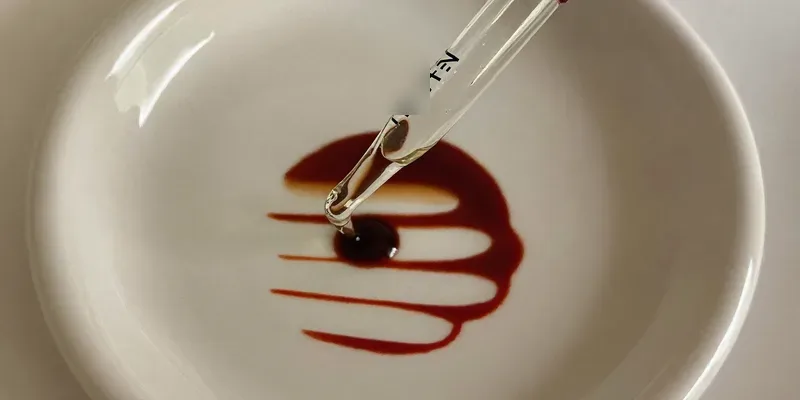
The standard description is the consistency of milk, and it is a better guide than it sounds. Lift your stirrer out of the mix and watch what comes off it. Milk consistency runs in a thin continuous stream and disappears back into the surface almost immediately.
Too thick and it falls in blobs and leaves a visible ridge where it lands. Too thin and it sheets off the stirrer like water and you can see through the film on the side of the well. Do that check three times in an evening and you will stop needing it.
Why Water Is Not the Same as Thinner
Water dilutes everything in the paint, including the acrylic binder that makes it stick. A little is harmless and generations of painters have used tap water for terrain. Push it further and you get a coat that looks fine and then rubs off at the first handling, or that lifts when you mask over it.
A purpose made thinner replaces carrier without gutting the binder, and most of them include something to help flow. Vallejo describes its airbrush thinner as extending the color and increasing fluidity without altering the properties of the paint, which is exactly the distinction. Our guide to airbrush thinner compares the common bottles.

Thinner, Flow Improver and Retarder
Three products, three jobs, endlessly confused. Thinner changes viscosity so the paint atomizes. Flow improver reduces surface tension and keeps paint moving at the tip, which is the direct answer to tip dry. Retarder slows drying overall, which helps with blending and in warm dry rooms.
You do not need all three to start. Buy the thinner, add a flow improver when the paint keeps crusting on the needle, and consider a retarder only if you are doing long smooth blends. Our article on flow improver and retarder covers how much is too much, because all three can be overdone.

Reading the Symptoms
The model tells you what the mix is doing. Work through this table before touching anything else, because the free fixes here solve more problems than any purchase will.
| What you see | Usual cause | First fix | Then try |
|---|---|---|---|
| Spatter and grainy texture | Paint too thick | Add thinner a drop at a time | Raise pressure slightly |
| Paint crusting on the needle | Too thick, or dry warm air | Thin further, wipe the tip | Add flow improver |
| Runs and pooling | Too thin, or too close | Back off, thinner passes | Reduce thinner in the mix |
| Spider webbing | Too thin at too much pressure | Drop the pressure | Thicken the mix slightly |
| Orange peel texture | Drying before it levels | Move closer, lower pressure | Add retarder |
Notice that thick and thin problems both show up as bad coverage, which is why guessing does not work. Match the symptom, then change one thing at a time. Our articles on paint that is too thick and tip dry go deeper on the two most common ones.
A Repeatable Routine
Shake the bottle properly, because separated paint gives you a different mix every time. Put paint in the well, add thinner, stir until it is uniform rather than swirled. Check the run off the stirrer. Load the cup, spray a test card, and only then point it at the model.
The test card is the step everyone skips and the one that saves models. Ten seconds on a scrap of card tells you whether the mix and the pressure agree with each other, and a bad first pass on a card costs nothing.
Frequently Asked Questions
What is the correct ratio for thinning acrylic paint for an airbrush? There is no single correct ratio. Four or five drops of paint to one of thinner is a sensible start for airbrush ranges, two to one for thick brush paint, and then you adjust by eye. Pigment density varies too much between colors for a fixed number to work.
Can I thin acrylic paint with water for an airbrush? For terrain and practice, yes. For anything that will be handled or masked, use a proper thinner, because water dilutes the binder and weakens adhesion. The cost difference across a year of painting is small.
How do I know if my paint is thin enough? Lift the stirrer and watch it run off. A thin unbroken stream that vanishes into the surface is about right. Blobs mean thicker than you want, sheeting like water means you have gone too far.
Should I thin paint that says it is airbrush ready? Sometimes. Most of a dedicated range sprays as it comes, but metallics and dense opaques usually need a drop or two. Judge the bottle in front of you rather than the label.
Why does my paint block the nozzle even when it is thinned? Either the pigment is coarse, which happens with craft acrylics, or the paint is drying in the nozzle between passes. Straining the mix helps with the first, and a flow improver plus more frequent backflushing helps with the second. Our guide to airbrush clogging works through the rest.
The Bottom Line
Start at roughly four or five drops of paint to one of thinner, mix outside the cup, and judge the result by how it runs off the stirrer rather than by the number you used. Use a thinner made for your paint family instead of water on anything you care about, add a flow improver when tip dry starts interrupting you, and spray a test card before the model. That routine removes most of the problems people buy new airbrushes to solve. Read next: which airbrush thinner to buy and the paint types explained.