Last updated: August 23, 2026
If one product introduced a generation of modelers to airbrushing, it is this one. The Cool Runner II turns up in more first setups than any other compressor, usually as part of a bundle with two or three brushes, and it has accumulated one of the longest review histories in the hobby. Interest in it is still growing rather than tailing off.
Longevity in a listing is not the same as being the right buy today, though. The interesting questions are which version you should get, what it genuinely does well, and what starts to annoy people after a year of use.
This article contains affiliate links. If you buy through them, we may earn a commission at no extra cost to you. Learn more.
Quick Answer
Is the Master Airbrush Cool Runner II worth buying?
- You need complete, regulated, filtered air in one order: yes, this is the safe pick.
- You paint in the evening in a shared home: take the tank version, not the tankless one.
- You want three brushes to experiment with: the multi brush kits make sense once.
- You already own a shop compressor: buy a regulator instead and skip this.
Bottom line: the regulator and water trap are already fitted, which is exactly what cheaper compressors leave out.
What Master Actually Specifies
The brand lists the TC-320 as a one fifth horsepower single piston compressor with two cooling fans, a regulator with gauge, a water trap, and an automatic shutoff preset to stop at 57 PSI and restart at 43, with a stated noise level of 47 decibels. The TC-326T is the same idea with an air tank added.
Two of those items are the reason to choose it. A regulator you can set deliberately and a trap that catches condensation are the parts that budget compressors leave off, and without them you spend your first month diagnosing problems that are not your fault.
The Cooling Fans Are Not Marketing
A small piston compressor gets hot, and hot air carries more moisture into your hose. Fans that keep the pump cooler reduce that, which is why long sessions with this unit produce fewer surprise water droplets than with an unventilated budget pump.

Tank or Tankless: The Decision That Matters
A tankless compressor runs continuously while you spray, which gives a faint pulse in the air and a constant drone in the room. A tank version fills, shuts off, and stays silent until the pressure drops, so the motor runs a fraction of the time and the air arrives flat.
For miniature painting the pulse is a minor issue and the noise is not. If you paint after the household has gone to bed, the tank version is the one, and our tank compressor guide explains the rest of the difference.

Drain the Tank
Any tank collects water at the bottom, and the drain valve exists for that reason. Open it at the end of a session, let it hiss, close it. Skipping this for a year is how a tank corrodes from the inside and how water reaches your basecoat despite the trap.
The Bundled Brushes
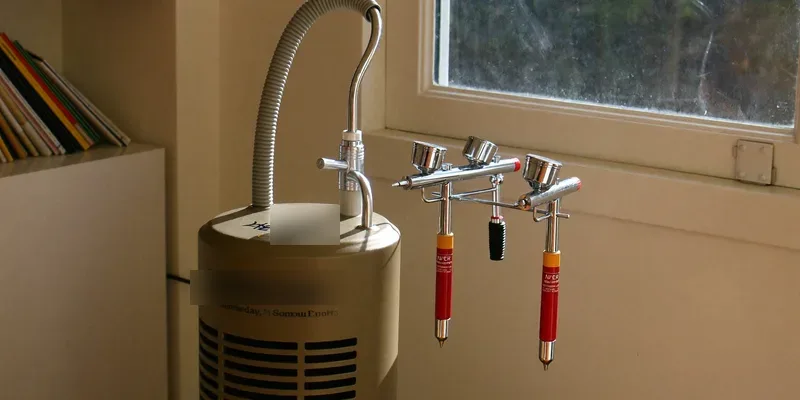
The multi brush kits typically pair the compressor with a dual action gravity feed brush listed at 0.3mm, a small cup version listed at 0.2mm, and a single action siphon feed model with a much larger tip and bottles. Three brushes sounds like marketing and is actually useful for one specific reason.
Keeping one brush loaded with primer, one with your main basecoat and one for detail removes the cleaning cycle between stages, which is the part of the hobby that quietly causes people to stop. The brushes themselves are mid tier and behave like it.
Cool Runner II Versions Compared
The configurations you will actually see listed, using the manufacturer’s published figures.
| Version | Air supply | Fitted as standard | Best for |
|---|---|---|---|
| TC-320 | Tankless, runs while spraying | Regulator, gauge, water trap, auto shutoff | Daytime painting, lowest outlay |
| TC-326T | Tank, motor cycles on and off | Same, plus tank and drain valve | Evening painting in a shared home |
| Kit with one brush | Either | Hose and a dual action brush | You already know which brush you want |
| Kit with three brushes | Either | Gravity pair plus a siphon model | Batch painting without cleaning between stages |
Other budget options are compared in our budget compressor guide.
What Wears Out After a Year
Three things, in order of likelihood. The water trap fills and needs emptying, which is maintenance rather than wear. The bundled airbrush needle bends or the tip gets damaged, usually from being pushed into dried paint. And the auto shutoff switch cycles more often as seals age, which shows up as the motor kicking in more frequently.
None of that is unusual for the class, and the pump itself generally outlasts the brushes. What you cannot do is have it serviced locally, because this is a sealed appliance sold through one channel rather than a repairable hobby machine.
The Moisture Problem That Is Not the Compressor
Water arriving at the brush after half an hour is normal physics rather than a defect. Warm air holds moisture, it condenses as it cools along the hose, and the trap at the compressor never sees it. A second inline trap near the brush is the fix, as explained in our moisture trap guide.

Who Should Buy Something Else
If a shop compressor is already in the garage, that tank gives flatter, drier air than any hobby unit and you only need a low pressure regulator and the right adapters. If silence matters more than anything else, quieter dedicated units exist. And if you want a machine you can have repaired in ten years, look at the hobby brands that publish parts diagrams.
Our guides to the quiet compressor and the shop compressor route cover both alternatives.
Frequently Asked Questions
Is the Cool Runner II quiet enough for an apartment? The tankless version produces a steady drone the whole time you spray, which some people find easier to live with than sudden noise and others find worse. The tank version is silent between refills, which is usually the better pattern in a shared home.
Does it come with a regulator and water trap? Yes, both are fitted as standard according to the manufacturer’s listing, which is the main reason to choose it over a cheaper unit. You may still want a second trap at the brush end for long sessions.
What pressure should I set for miniatures? Somewhere in the mid teens for detail and shading, higher for primer and varnish. Set it deliberately with the gauge rather than by ear, and see our guide to PSI for working ranges.
Can I run two airbrushes from it? One at a time comfortably. Running two simultaneously at painting pressures asks more of a small pump than it is built for, and the pressure sags noticeably. A splitter for convenience is fine; two people painting at once is not.
How long can I run it continuously? The cooling fans exist to extend that, and the tank version reduces running time considerably because the motor is off for much of a session. Let it rest if the housing becomes hot to the touch.
Is the bundled airbrush any good? Serviceable rather than good. It will teach you thinning, pressure and cleaning, and it is the part most people replace first. Our G233 review covers the better brush from the same brand.
The Bottom Line
The Cool Runner II remains the safest complete first setup because it arrives with the two parts cheap compressors omit: a regulator you can set and a trap that catches water. Choose the tank version if you paint in the evening or if pulsing air has been a problem, drain that tank at the end of a session, and expect to add an inline trap near the brush once your sessions get longer. The pump will outlast the bundled brushes, which is the normal and perfectly acceptable outcome. Read next: the Master Airbrush range and how to choose a compressor.