Last updated: August 23, 2026
The Neo is the airbrush people buy when they want an Iwata but not an Iwata price. It carries the name, it comes from the same company, and it sits in the craft store cabinet next to brushes nobody has heard of. The obvious conclusion is that it must be a smaller, cheaper Eclipse.
It is not, and that single misunderstanding causes most of the disappointment attached to this brush. Neo is a separate product line with its own parts, its own build and its own reasons to exist. Judged as what it is, it is a sensible first airbrush. Judged as a budget Eclipse, it will annoy you.
This article contains affiliate links. If you buy through them, we may earn a commission at no extra cost to you. Learn more.
Quick Answer
Should you buy the Iwata Neo CN as your first airbrush?
- As a first brush to learn on: yes, it sprays properly and it is forgiving.
- As a cheaper route to Eclipse quality: no, it is a separate line with separate parts.
- You want a second brush for primer: it does that job well and cheaply.
- You already know you will stay in the hobby: skip it and save toward the Eclipse.
Bottom line: a good beginner brush wearing a premium badge, not a premium brush at a beginner price.
What Neo Actually Is Within the Iwata Range
Neo is sold as “Neo for Iwata”, which is the clue. Iwata’s own product pages list it separately from the Eclipse, High Performance and Custom Micron families, and the Neo parts catalogs that dealers stock are their own list rather than a subset of the Eclipse list. The design comes from Iwata; the production and the price point do not sit alongside the Japanese built brushes.
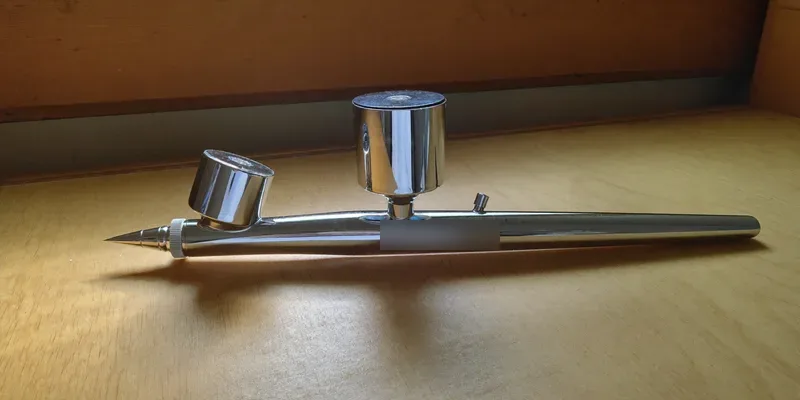
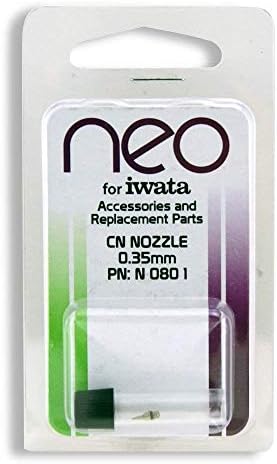
The CN is the gravity feed, dual action model in that line. Iwata specifies it with a 0.35mm nozzle and lists it with a 7ml cup with a lid plus a smaller 3ml cup, which is more cup flexibility than the Eclipse offers.
Why the Shared Nozzle Size Confuses People
Both the Neo CN and the Eclipse HP-CS are listed at 0.35mm, so on paper they look like the same tool at two prices. Nozzle diameter is only one variable. Machining tolerance, needle finish, trigger mechanism and seal quality all differ, and those are the things you feel rather than read.

What the Neo Does Well
It atomizes thinned acrylic at low pressure better than most brushes in its bracket, which is the one thing a beginner brush has to get right. Priming, zenithal work and basecoating a squad are all comfortably within it, and the two cup sizes mean you are not flushing a big cup for a few drops of glaze.
It is also genuinely easy to live with. The trigger is light, the needle is not fragile, and the whole brush comes apart with the wrench in the box. For someone finding out whether airbrushing suits them, that is a fair deal.
The Second Brush Argument
Plenty of painters who own something premium keep a Neo loaded with primer. Primer is the harshest thing you spray, it is the fastest way to wear a nozzle, and it is not work that rewards a delicate brush. Dedicating a cheap, capable brush to it saves the good one and saves a cleaning cycle.
Where the Neo Disappoints
Parts. Dealers stock Neo spares, but the range is thinner than for the Japanese built lines, and nothing from the Eclipse shelf drops in. If you bend a needle on a Friday evening, the Eclipse owner orders a catalogued part and the Neo owner starts searching. That gap matters more over years than it does in the first month.
The second issue is ceiling rather than fault. Fine freehand at very low pressure is where the difference between tiers shows up, and the Neo reaches its limit sooner than brushes costing more. That is not a defect, it is the tier.
Neo CN Against Neo BCN and the Eclipse
Three brushes that get shortlisted together, plus the budget hobby brand that has changed the entry tier. Specifications are the figures the manufacturers publish on their own listings.
| Airbrush | Feed and nozzle | Parts situation | Best use |
|---|---|---|---|
| Neo CN | Gravity, 0.35mm | Own parts list, limited depth | First brush, or a primer brush |
| Neo BCN | Siphon, 0.5mm | Same line, fewer spares | Large areas, terrain, bottles of paint |
| Eclipse HP-CS | Gravity, 0.35mm | Deep, long lived catalog | The buy once brush |
| Gaahleri GHAD-39 | Gravity, 0.35 and 0.5mm | Spares and lube in the box | Modular budget starting point |
Feed types are explained properly in our gravity feed versus siphon feed guide.
Neo Kits and What Comes With Them
The Neo appears constantly in bundles with a small compressor, a hose and sometimes a starter paint set. The brush in the bundle is the same brush. The compressor rarely is the one you would pick on its own, and in this bracket it is usually tankless, unregulated or both, which shows up as pulsing air and water in your basecoat.
If the bundle is how you get started, get started. Just expect the air side to be the first thing you upgrade, and read our compressor guide before you decide the brush is the problem.
The Honest Recommendation Path
If money is the constraint, the Neo is a real airbrush and will teach you everything: pressure, thinning, distance, cleaning discipline. If money is only a delay, the sensible move is to wait and buy the Eclipse, because the Neo you buy today rarely gets sold on, it gets put in a drawer.
Between those two positions sits the budget hobby brand tier, which now competes hard on modularity and included spares. Our brands comparison lays the whole ladder out side by side.
Frequently Asked Questions
Is the Neo CN made by Iwata? It is designed and sold by Iwata under the “Neo for Iwata” name, and marketed as a separate line rather than as part of the Japanese built families. Treat the badge as a design pedigree, not as a promise that it matches the Eclipse on the bench.
Do Eclipse parts fit a Neo? No. The needles, nozzles and seals are their own line, and dealers list them separately. Order Neo parts for a Neo, and check availability before you commit if long term serviceability matters to you.
Is the Neo good enough for miniature painting? Yes for priming, zenithal work, basecoats and general coverage, which covers most of what an airbrush saves you time on. It will feel limited if your goal is very fine freehand or thin glazes at low pressure.
Neo CN or Neo BCN for models? CN for almost everyone. Gravity feed with a small cup suits the frequent color changes of figure painting, while the siphon fed BCN and its larger nozzle make more sense for terrain and large surfaces.
Why does my Neo spit at the start of a stroke? Usually paint that is too thick or pressure that is too low, not the brush. Work through thinning to a milk consistency first, then check the tip for dried paint before blaming the nozzle.
Should I buy the Neo or save for something better? Buy it if you need to know whether you enjoy airbrushing before spending more. Save if you already know the answer. Both are reasonable, and only one of them is a mistake, which is buying the Neo expecting Eclipse behavior.
The Bottom Line
The Neo CN is a competent entry level airbrush that happens to carry a premium name, and the name is exactly what causes the trouble. Bought as a learner brush or as a dedicated primer sprayer it is money well spent, and its two cup sizes are genuinely useful. Bought as a shortcut to Eclipse performance it will always feel like a compromise, because it is a different product line with its own parts and its own ceiling. Read next: the Iwata range explained, and the Eclipse HP-CS if you are deciding whether to wait.