Last updated: August 23, 2026
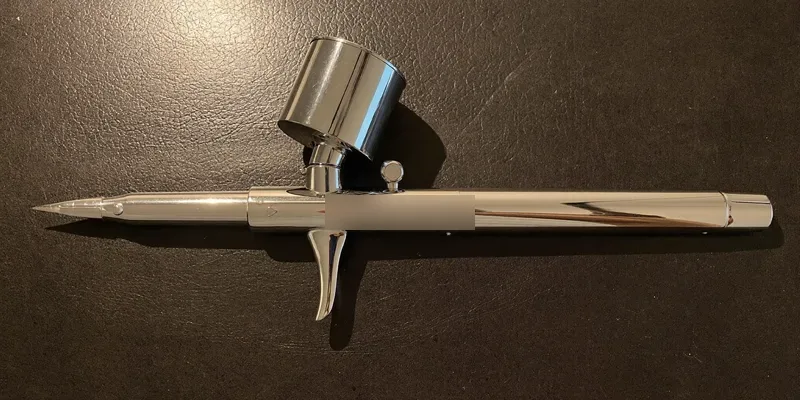
Ask a miniature painting forum what airbrush to buy when you are done experimenting, and one model name comes back more than any other. It is not the most expensive Iwata, it does not have the smallest nozzle, and it looks almost plain next to the chrome plated European brushes. It is the Eclipse HP-CS, and searches for it have climbed several times over in the past year.
That kind of jump usually means a product went viral for the wrong reasons. This one is different. The Eclipse became the default answer because it is the brush people stop replacing, and the reasons are boringly practical rather than glamorous.
This article contains affiliate links. If you buy through them, we may earn a commission at no extra cost to you. Learn more.
Quick Answer
Is the Iwata Eclipse HP-CS the right airbrush for you?
- You want one brush that primes, basecoats and still pulls a fine line: yes, this is the one.
- You paint 28mm figures and hate cleaning fiddly parts: the compression fit nozzle is the selling point.
- You only ever do hairline freehand: a smaller nozzle brush suits you better, and the Eclipse stays as the workhorse.
- You are not sure the hobby will stick: start cheaper and come back to this later.
Bottom line: it is not the finest brush Iwata makes, it is the one that stops you buying another.
What the Eclipse HP-CS Actually Is
Iwata lists the Eclipse HP-CS as a gravity feed, dual action airbrush with a 0.35mm nozzle and a 7ml cup with a lid, built in Japan. That is the whole specification sheet, and the absence of clever features is deliberate. There is no air control valve on the body, no interchangeable head system in the box, and no color coded parts.
What you get instead is a needle and nozzle pairing that Iwata has barely changed in decades, and a parts supply that every hobby dealer in the country stocks. Iwata’s own replacement nozzle listing covers the CS along with the BS and SBS bodies, so a spare bought today fits a brush bought years ago.
The 0.35mm Nozzle Is Bigger Than It Sounds
Painters shopping by numbers assume 0.35mm is too coarse for figures. In practice it sprays thinned acrylic at low pressure without the tip drying every thirty seconds, handles primer straight from the bottle range, and still narrows to a line fine enough for camouflage edges. The nozzle size guide covers where the smaller sizes genuinely help.

The Compression Fit Nozzle Is the Real Feature
Most airbrushes in this price region use a tiny threaded nozzle that screws into the head. It is the part people cross thread, over tighten, crack, and then spend a week diagnosing as a paint problem. The Eclipse uses a compression fit nozzle that seats without threading, which removes the single most common self inflicted failure in airbrushing.
The practical result is that a full strip down is a two minute job with no anxiety attached. You can take the head apart on the kitchen table, wipe everything, and put it back together without a jeweler’s touch or a special wrench.
What That Means for Cleaning Habits
Because dismantling is low risk, people actually do it. Half the tip dry and clogging complaints in this hobby come from brushes that get flushed but never opened, and a brush you are afraid to disassemble becomes a brush that slowly fills with dried paint. Our guide to cleaning an airbrush covers the between colors routine and the deep clean separately.
Where the Eclipse Falls Short
Three honest limitations. The trigger is stiffer and less nuanced than a Harder and Steenbeck at the same tier, the cup is fixed rather than swappable so you carry 7ml of capacity whether you need it or not, and there is no air control valve on the body, so pressure changes happen at the regulator.
None of these stop it working. They are the reasons some painters who own one still reach for a European brush for long glazing sessions, and it is worth knowing that before you assume the Eclipse is objectively the best tool in every situation.
It Is Not a Detail Brush by Iwata’s Own Range Logic
Iwata sells finer brushes, and the Custom Micron line exists precisely because 0.35mm has a floor. For nearly everyone reading this the Micron is the wrong purchase, since it demands better thinning, cleaner air and more patience than most benches provide. The Eclipse sits where the useful work happens.
Eclipse HP-CS Against the Obvious Alternatives
Four brushes that regularly come up in the same shopping conversation, with the difference that decides it. Nozzle figures are the manufacturer specifications from the product listings.
| Airbrush | Nozzle | Standout trait | Choose it when |
|---|---|---|---|
| Iwata Eclipse HP-CS | 0.35mm | Compression fit nozzle, easy strip down | You want to buy once |
| Iwata Neo CN | 0.35mm | Separate entry line, different parts | Budget is the deciding factor |
| Harder and Steenbeck Ultra | 0.28 or 0.45mm | Finer trigger feel, shared spares line | Trigger control matters most |
| Badger Patriot 105 | 0.5mm | Made in the USA, two angle needle | You want domestic parts support |
The full ladder across every brand is laid out in our airbrush brands comparison.
Buying the Brush Alone or as a Kit
Iwata sells the HP-CS on its own and in kits that add a hose and sometimes a compressor. The brush is identical in both, so the question is only whether the bundled air is air you would have chosen. Frequently it is not, because kit compressors are picked to hit a bundle price rather than to suit the brush.
If you already have steady, regulated, dry air, buy the brush by itself. If you are starting from nothing, read our guide to kits with a compressor before committing to a bundle you will half replace.

Living With It: Parts, Wear and Long Term Cost
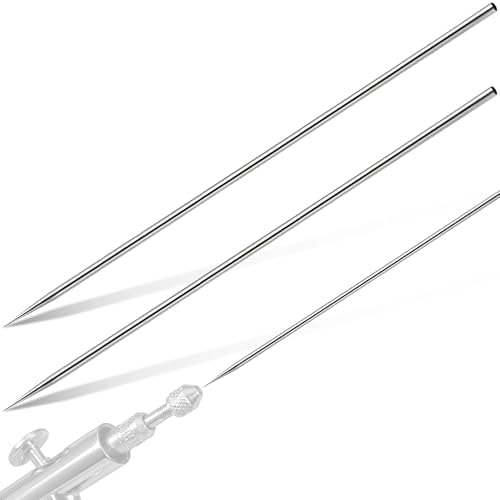
The parts that wear are the needle, the nozzle and the seals, in that order. A needle bends when it gets pushed into a dried tip or dropped point down, and a nozzle eventually gets damaged by an over enthusiastic reamer rather than by use. Both are catalogued items you can order without hunting.
That availability is the quiet reason this brush retains its value. A ten year old Eclipse with a fresh needle behaves like a new one, which is not something you can say about most sealed budget brushes. Our page on airbrush replacement parts covers when a rebuild beats a replacement.
What It Needs Around It
An Eclipse on poor air is still a compromised setup. It wants a regulator you can set deliberately in the teens and low twenties PSI, a moisture trap close to the brush, and paint thinned to a milk consistency. Get those three right and the brush disappears from your attention, which is the entire point of it.
Start with thinning acrylic paint, then check the compressor guide if your air pulses or spits.
Frequently Asked Questions
Is the Eclipse HP-CS good for miniatures at 28mm? Yes, and it is the single most recommended brush for that scale. The 0.35mm nozzle handles primer and metallics that choke finer setups, while still pulling lines tight enough for freehand on a shoulder pad. Most owners never feel the need for a second, finer brush.
What is the difference between the HP-CS and the HP-C Plus? Different lines. The Eclipse HP-CS is the simple workhorse with a 0.35mm nozzle. The High Performance HP-C Plus uses a smaller nozzle and adds an air control valve on the body, which suits illustrators more than figure painters. The Eclipse is the more forgiving of the two.
Can I put a smaller nozzle in an Eclipse? Not usefully. The Eclipse head system is built around its own sizing, and painters who want finer work generally add a second brush rather than convert this one. If interchangeable head sets matter to you, look at the German brands instead.
Is it worth buying used? Often yes, because the wear parts are all replaceable and cheap relative to the brush. Check that the needle is straight and the nozzle is not visibly split, and budget for a fresh needle and seal set. A neglected Eclipse usually cleans up into a working brush.
Does it come with everything I need? The brush comes with the cup and lid. You supply the hose, the air, the cleaner and the thinner. Our starter kit guide lists the full shopping list so nothing arrives missing.
Why do some listings say 0.3mm? Sloppy listing copy, mostly. Iwata specifies the CS with a 0.35mm nozzle, and the same size appears on the related Eclipse bodies. If a seller lists 0.3mm on an HP-CS, treat it as a typo rather than a variant.
The Bottom Line
The Eclipse HP-CS earns its reputation by being unexciting in exactly the right places: a nozzle you cannot cross thread, parts you can always buy, and a spray pattern that covers priming through to fine lines without a swap. It is not the most refined trigger on the market and it is not a dedicated detail brush, and neither of those things will slow down a miniature painter. Read next: the full Iwata range to see where the Eclipse sits, or the Eclipse against the Evolution if you are weighing the two premium options against each other.