Last updated: August 23, 2026
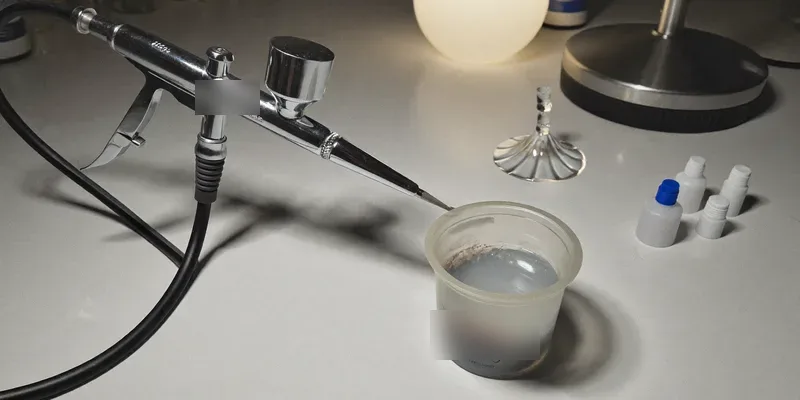
Air hisses out of the front exactly as it should. You pull the trigger back and nothing happens. The cup is full, the compressor is running, and the model in front of you stays gray while you pull the trigger further and further back until you are worried about the needle.
An airbrush that blows air but will not move paint is nearly always one of five things, and four of them are free to fix at the table in a few minutes. The fifth needs a part. What matters is checking them in an order that does not damage anything, because the usual instinct, which is to pull harder and poke something into the front, is how a cheap problem becomes an expensive one.
This article contains affiliate links. If you buy through them, we may earn a commission at no extra cost to you. Learn more.
Quick Answer
Why is my airbrush blowing air but not spraying paint?
- The needle is stuck in dried paint, so pulling the trigger back moves nothing.
- The paint channel or nozzle is blocked with cured paint from last session.
- The needle chuck came loose, so the trigger moves but the needle stays put.
- Paint is too thick to be drawn through at all. Thin it and try again.
Bottom line: soak and backflush before you poke anything. Force at this point is what bends needles and cracks nozzles.
Check the Needle Actually Moves
Loosen the handle end, pull the trigger back and watch the needle. On most brushes you can see or feel it slide. If the trigger travels and the needle does not, either the chuck nut behind it has worked loose or the needle is glued in place by dried paint. Both are common and neither needs a new brush.
A loose chuck is the happiest outcome here, because it takes one gentle turn to fix. Nip it up until the needle moves with the trigger, without crushing it, then test the spray before doing anything else.
The Free Fixes, in Order
These take a few minutes and solve most cases. Do them in sequence, testing after each, and stop as soon as the paint flows so you know which one it was.
Empty the cup and fill it with cleaner. Backflush by covering the crown and pulling the trigger so air bubbles back into the cup. Loosen the chuck, ease the needle back a few millimeters, wipe it and reseat it. Unscrew the nozzle, check nothing is packed into it, and refit it snugly. Thin the paint further. Only then consider taking the front end apart.
Never Pull a Stuck Needle Hard
If the needle will not move, the paint holding it is the problem and force is not the answer. Fill the cup with cleaner, leave it to soften the channel, and try again. Yanking a needle that is stuck in cured paint drags hardened material along the taper and hooks the tip, which our bent airbrush needle guide covers.
Cause One: Dried Paint Inside the Channel
This is the most frequent reason a brush that worked last month refuses to spray today. Paint left in the passage cures into a hard plug that air travels around but paint cannot travel through, and no amount of trigger pressure shifts it.
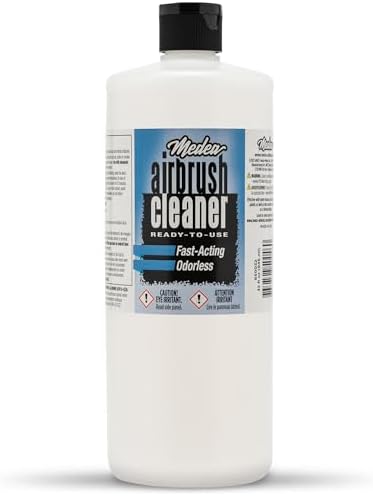
Soaking is what works. Fill the cup with airbrush cleaner, let it sit while you do something else, then backflush and repeat. Stubborn cases need the front end stripped and the parts soaked separately. Work with the ventilation the cleaner manufacturer specifies in its safety data sheet, and spray waste into a covered pot rather than into the room.
Cause Two: The Nozzle Is Blocked or Misfitted
A nozzle packed with dried paint gives you exactly this symptom, and so does a nozzle that was refitted crooked after the last clean. Take it out, hold it up to the light, and look through it. If you cannot see daylight, it is blocked. If it does not seat cleanly, it will not pass paint properly even when clear.
Soak it, clear it gently with the fine wire from a cleaning set, and refit it snugly without forcing. Straight in and straight out with any reamer, because scoring the inside of a nozzle changes the spray pattern for good. Our guide to cleaning an airbrush nozzle covers the technique in more detail.
Cause Three: The Paint Never Stood a Chance
Bottle strength paint, a fine nozzle and a low pressure setting can combine into a brush that simply will not draw. Nothing is broken and nothing is blocked; there is just not enough energy in the system to move that fluid through that opening.
Thin the paint until it runs off a stirrer in a stream rather than in drops, raise the pressure a step, and it will usually start. Our guide to thinning acrylic paint for airbrush covers the consistency, and paint that is too thick covers the symptoms that come with it.
Cause Four: Air Is Not Reaching the Paint
Less common, but worth ruling out. If the air valve is partly blocked or the trigger is sticking in its housing, you can get a weak flow that sounds normal at the front but never generates enough suction at the nozzle to lift paint from the cup.
Check that the trigger returns crisply and does not feel gummy. Old lube mixed with paint dust makes triggers sticky, and a clean plus a trace of the maker’s own needle lube on the moving parts restores it. Do not lubricate anything the manufacturer says to keep dry.

Working Through It Systematically
Each cause has a distinct tell, so identify yours from the observation column rather than trying every remedy in turn.
| Observation | Cause | Free fix | If that fails |
|---|---|---|---|
| Trigger moves, needle does not | Loose chuck or stuck needle | Nip the chuck, soak and ease back | New needle if the tip hooked |
| Air fine, no paint at all, brush was stored | Cured paint in the channel | Soak with cleaner, backflush | Strip the front and soak parts |
| Nozzle will not pass light | Blocked nozzle | Soak, clear gently, refit snugly | Replacement nozzle |
| Thick paint, fine nozzle, low pressure | Nothing is broken | Thin the paint, raise pressure | Larger nozzle for that paint |
Preventing the Next One
Almost every case of a brush that will not spray traces back to the end of the previous session. Paint that goes into storage inside the brush cures there, and the cost of that is the hour you are spending now. A flush with cleaner and one backflush until it runs clear takes a couple of minutes.
Spraying that flush into a covered cleaning pot keeps the mist and the solvent contained, which matters at a kitchen table more than anywhere. Our cleaning guide sets out the short routine, and the maintenance schedule covers what deserves attention monthly rather than nightly.

Frequently Asked Questions
My airbrush worked last time and now sprays nothing. What changed? Paint dried inside it in the meantime. That is the single most common answer. Fill the cup with cleaner, let it soak, backflush, and repeat before taking anything apart or blaming the tool.
Why does the trigger feel loose with no paint coming out? The needle chuck has probably worked loose, so the trigger travels without dragging the needle back. Loosen the handle, nip the chuck up gently until the needle follows the trigger, and test again.
Can I soak the whole airbrush in cleaner overnight? Not the whole brush. Solvent based cleaners attack some seals and can strip finishes, and long soaks are exactly where that damage happens. Soak metal front end parts separately and follow what the cleaner manufacturer states about plastics and rubber.
Is it worth stripping the brush completely at this point? Only after soaking and backflushing have failed. Full disassembly introduces the two most common damage modes in the hobby, bent needles and cracked nozzles, so treat it as a last step and not a first response.
How do I know if the nozzle is cracked rather than blocked? A blocked nozzle passes nothing. A cracked one sprays, badly, with an unsteady pattern and often bubbles in the cup. If you have air escaping backwards, our airbrush sputtering guide is the right place to continue.
The Bottom Line
Check that the needle moves with the trigger, then soak and backflush before touching anything with a tool. Cured paint in the channel and a blocked nozzle account for most of these cases, and both respond to cleaner and patience rather than to force. If the brush still refuses with cleaner in the cup and a clear nozzle, it is a part and not a technique. Read next: airbrush cleaner for what to soak with, and airbrush cleaning kit for the tools that clear a blocked front end safely.