Last updated: August 23, 2026
Vallejo is the range most airbrush painters end up standing in front of, and it is also the range with the most confusing shelf. Model Air, Model Color, Game Air, Game Color, Panzer Aces, Mecha Color, plus a row of unlabeled looking bottles with numbers on them. They are not interchangeable, and picking the wrong one is the classic first purchase mistake.
The good news is that the logic behind the names is consistent once someone explains it. Air means formulated for spraying, Model means historical and scale subjects, Game means fantasy and sci fi. From there the decision takes about a minute.
This article contains affiliate links. If you buy through them, we may earn a commission at no extra cost to you. Learn more.
Quick Answer
Which Vallejo range belongs in an airbrush?
- Model Air: the spraying range, historical and scale color coverage, load and go.
- Game Air: the same idea with fantasy and sci fi colors.
- Model Color and Game Color: brush ranges. They spray, but only after real thinning.
- The numbered bottles are auxiliaries: thinner, flow improver, cleaner. Buy at least the thinner.
Bottom line: Air ranges for the cup, Color ranges for the brush, and one bottle of thinner covers both.
How the Ranges Are Organized
Vallejo splits its hobby paint on two axes. The subject axis separates Model, aimed at scale and historical modeling, from Game, aimed at fantasy and sci fi miniatures. The application axis separates Air, thinned and milled for airbrushes, from Color, which is thicker and built for a brush.
Everything else in the catalog hangs off those two ideas. Once you know that Air means sprayable and Color means brushable, the wall of bottles resolves into two columns and a shelf of supporting products.
Model Air: the One Most People Want
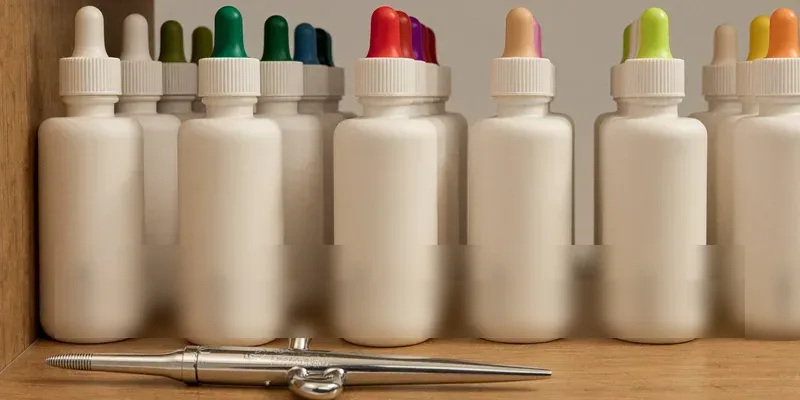
Model Air is the range built for the airbrush. It comes in dropper bottles, it is thin enough to spray with little or no adjustment, and the color coverage leans toward aircraft, armor and figures. If you paint scale models, this is the range. If you paint fantasy miniatures, it is still a perfectly good range with slightly unexpected color names.
The dropper bottle is the underrated feature. Counting drops of paint against drops of thinner is how you learn a repeatable ratio, and it is far more reliable than eyeballing a pot. Keep the bottle upright, shake it properly, and it stays consistent for years.

Game Air Against Game Color
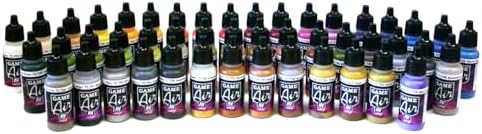
Game Air is Model Air’s fantasy counterpart: pre thinned, dropper bottles, colors named for armor and skin and cloaks rather than for military standards. If your shelf is full of Game Color already and you want the same palette in the cup, this is the direct match.
Game Color sprays too, with thinning, which is the reason plenty of painters skip Game Air entirely and buy a bottle of thinner instead. That is a legitimate choice and it saves shelf space. The trade is one more step and slightly more variation between colors.
When Model Color Makes Sense in an Airbrush
Rarely as a first choice, often as a practical one. If the exact color you need only exists in Model Color, thin it and spray it. Add thinner a few drops at a time until it runs off the stirrer in a thin stream, and be prepared for it to need more than you expect.
The Auxiliaries: the Numbered Bottles
Three of them matter for airbrushing. Vallejo describes 71.161 Airbrush Thinner as extending the paint and increasing fluidity without altering its properties, 71.462 Flow Improver as reducing tip drying and improving flow, and 71.099 Airbrush Cleaner as a between colors cleaner that also lubricates the mechanism.
Those are three different jobs and people mix them up constantly. Thinner changes consistency, flow improver changes how the paint behaves at the tip, and cleaner does not belong in your paint at all. Our article on the Vallejo airbrush thinner goes into what each one actually does to a mix.

Why the Ecosystem Is the Real Argument
The selling point of Vallejo is not any single bottle. It is that the paint, the thinner, the flow improver, the primer and the cleaner are formulated by the same maker to work together, so when something goes wrong you have removed one variable. That is worth more to a beginner than a marginal difference in pigment.
| Product | What it is | Use it when | Do not |
|---|---|---|---|
| Model Air | Sprayable scale and historical colors | Default airbrush range | Expect brush coverage from it |
| Game Air | Sprayable fantasy colors | Matching a Game Color palette | Buy it if you own a thinner already |
| 71.161 Thinner | Consistency adjuster | Any paint too thick to spray | Use it as a cleaner |
| 71.462 Flow Improver | Tip dry and flow additive | Paint drying on the needle | Use it as your only thinner |
Add the cleaner and you have the full working set. Our guide to airbrush cleaner compares it against the other common bottles on that shelf.

Known Quirks Worth Planning For
Two things owners mention repeatedly. Dropper bottles can clog at the tip if paint dries in the nozzle of the bottle itself, which a quick wipe after use prevents. And paint that has sat for months separates, so a bottle that has not been shaken properly will spray badly and get blamed on the airbrush.
Both are housekeeping rather than product faults, but they cause a disproportionate share of bad sessions. A paint shaker or thirty seconds of vigorous shaking before every bottle solves the second one entirely.
Frequently Asked Questions
What is the difference between Model Air and Model Color? Model Air is formulated thinner and finer for spraying, Model Color is a brush paint. Both come in dropper bottles and the color names overlap, which is exactly why people buy the wrong one. Check for the word Air on the label.
Do I still need thinner if I buy Model Air? Usually yes, for some colors. Most of the range sprays as it comes, but dense pigments and metallics run thicker in every brand. One bottle of thinner covers the whole shelf, so buy it with your first paints.
Can I thin Vallejo with water? You can, and plenty of people do for terrain and rough work. Water dilutes the binder as well as the pigment, so adhesion suffers as you add more. For anything you care about, use the thinner made for the range.
What is the difference between thinner and flow improver? Thinner makes paint less viscous. Flow improver keeps it flowing at the tip and slows drying there, which is the fix for paint crusting on the needle. They solve different problems and most painters end up owning both.
Is Vallejo good for beginners? Yes, largely because everything you need comes from one maker and is documented in the same terms. That removes a lot of guesswork when something goes wrong, which matters more early on than any difference in pigment quality.
The Bottom Line
Buy Model Air if you paint scale subjects, Game Air if you paint fantasy and want the palette to match your existing Game Color bottles, and take Model Color or Game Color into the cup only when the exact shade lives nowhere else. Add the thinner from day one and the flow improver when tip dry starts to annoy you, and the range does what it promises with very little drama. Read next: paint for miniatures compared and how to thin acrylic paint properly.