Last updated: August 23, 2026
Tamiya paint is the one that trips people up on their first airbrush session, and it is almost never the paint’s fault. Somebody buys a jar of XF-1 Flat Black because the kit instructions call for it, thins it with water the way they would thin a miniature paint, and ends up with a cup of curdled sludge and a nozzle full of grit.
Tamiya acrylic is not the same animal as Vallejo or Citadel, even though the label says acrylic on all three. It behaves differently because the carrier is different, and once you know that, it becomes one of the smoothest paints you can put through an airbrush. This is the short version of what took most of us a wasted afternoon to learn.
This article contains affiliate links. If you buy through them, we may earn a commission at no extra cost to you. Learn more.
Quick Answer
How do you airbrush Tamiya acrylic paint properly?
- Thin it with Tamiya X-20A, not water. Tamiya acrylic is alcohol based and water fights the carrier.
- X codes are gloss, XF codes are flat. The prefix tells you the finish before the color does.
- Aim for a mix that runs off the stirrer like milk, then adjust pressure rather than adding more thinner.
- Clean while it is wet. Dried Tamiya acrylic is stubborn and needs a solvent based cleaner to shift.
Bottom line: buy the big bottle of X-20A with your first jars. It is the single item that decides whether this paint sprays beautifully or clogs.
What Tamiya Acrylic Actually Is
It is an acrylic resin carried in alcohol rather than in water. That is the whole reason it behaves unlike the acrylics most miniature painters start with. The alcohol flashes off quickly, the film levels smoothly, and the paint keys onto styrene better than a water based acrylic does, which is why armor and aircraft builders keep coming back to it.
It also means water is the wrong diluent. Adding water to a jar of Tamiya acrylic can shock the mix, and the classic symptom is a cup of paint that looks like it has separated into grains. Nothing is broken and nothing is wasted permanently, but that cup is not going to spray.
X, XF and the Rest of the Codes
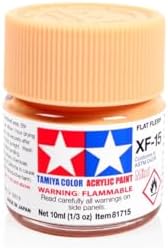
The prefix is the finish and the number is the color. X means gloss, XF means flat. So X-1 is gloss black and XF-1 is flat black, the same pigment family with different resin behavior. That is the whole system, and once you see it the paint rack in a hobby shop stops looking like a wall of random codes.
Tamiya also sells lacquer paints under LP codes and enamel under X and XF numbers in small square jars, which is where the confusion returns. The round jars with the X and XF codes are the acrylic line covered here. The LP line is lacquer, takes lacquer thinner and belongs in the conversation about lacquer versus acrylic paint instead.
X-20A Is the Part People Skip
X-20A is Tamiya’s own acrylic thinner and it is the correct diluent for the X and XF jars. It contains the alcohol blend the paint expects plus a retarding component, which is why paint thinned with X-20A levels out on the model instead of drying in mid air. Buying the large bottle rather than the small one is the standard advice for a reason.
Substitutes exist and modelers use them, most commonly isopropyl alcohol, which thins the paint but does not carry the retarder and tends to make tip dry worse. If you are new to the line, use X-20A until you know how the paint behaves, then experiment if you want to. The bottle lasts through a lot of jars.

Thinning Ratios That Work
Start around two parts paint to one part X-20A and adjust from there. Tamiya jars are not all the same viscosity out of the box, and flat colors with heavy pigment loads generally take more thinner than gloss colors. The target is a mix that sheets off a stirrer rather than dripping in blobs.
Judge the mix in the cup, not by the ratio on paper. If the spray comes out dry and dusty you are either too thick or too far from the model. If it beads and runs you are too thin. Our full method for reading consistency is in the guide to thinning acrylic paint for airbrush, and it applies here with X-20A in place of the water based thinner.
The Tamiya Range at a Glance
Four product lines carry the Tamiya name and get mixed up constantly in searches, so it is worth seeing which is which before you order.
| Line | Carrier | Thin with | Best for |
|---|---|---|---|
| X and XF acrylic | Alcohol based | X-20A acrylic thinner | General airbrush work on styrene |
| LP lacquer | Solvent based | Tamiya lacquer thinner | Gloss coats, vented setups only |
| Enamel (square jars) | Oil based | X-20 enamel thinner | Weathering and washes |
| Rattle cans (TS, AS) | Lacquer aerosol | Not thinnable | Large single-color areas |
Lacquer Thinner in Tamiya Acrylic
This is the most repeated trick in the Tamiya community: thinning X and XF acrylics with a hobby lacquer thinner instead of X-20A. Owners report that it sprays glassier, dries harder and resists tip dry better than the official thinner does. It works because the acrylic resin tolerates the stronger solvent.
It also changes the safety picture completely, and that part deserves the same attention as the finish. A lacquer thinner is a solvent product with its own safety data sheet from the manufacturer, listing it as a flammable liquid with harmful vapors and specifying the ventilation and protection the maker considers appropriate. If you adopt this trick you are spraying a solvent mix, so vent the room the way the sheet requires and treat your seals as consumables. Our airbrush ventilation page covers the room side.

Masking and Tape Compatibility
Tamiya acrylic takes tape well once it has properly hardened, which is one of the reasons armor and aircraft builders like it. It sits harder than a typical water based miniature acrylic, so a clean mask lifted at a shallow angle usually leaves a crisp edge instead of pulling flakes.
The failure mode is impatience. Paint that feels dry to a fingertip is not necessarily hard all the way through, and masking a fresh coat is the fastest way to peel your own work off the model. Give it real time, and if you are working over a large area, consider a gloss coat before masking so the tape has something smooth to seal against.
Cleaning Up After Tamiya
Flush while the paint is still wet and this line gives no trouble at all. X-20A works as a flush between colors, and a dedicated cleaner handles the end of the session. What you want to avoid is letting a cup of Tamiya acrylic dry inside the brush, because the hardened film does not soften in water.
For dried residue, Tamiya’s own airbrush cleaner is the matched product and it is solvent based, which is exactly what makes it effective and also what makes it hard on rubber seals. We cover that trade in detail in our Tamiya airbrush cleaner review, and the general routine is in how to clean an airbrush.

Frequently Asked Questions
Can I thin Tamiya acrylic with water? Not reliably. The carrier is alcohol based, so water can shock the mix and leave a grainy cup that will not atomize. Small amounts sometimes pass without incident, but X-20A is the intended thinner and it also carries a retarding component that water simply does not have.
What is the difference between X and XF Tamiya paints? The prefix is the finish. X is gloss, XF is flat, and the number after it identifies the color. Gloss versions generally spray a little easier straight from the jar, while flats carry more pigment and usually want a touch more thinner.
Is Tamiya acrylic good for miniatures? It works, and it sprays smoothly, but the color range is built around scale models rather than fantasy figures and the jars are less convenient than dropper bottles for mixing tiny amounts. Most miniature painters use Vallejo or Citadel Air for figures and keep Tamiya for vehicles.
Why does my Tamiya paint clog the airbrush? Usually thinning with the wrong liquid, or spraying a flat color at too low a pressure. Flats have heavy pigment loads and need both enough thinner and enough air. If the clog forms as a crust at the tip rather than inside, that is tip dry and our tip dry guide has the fix.
Do I need a primer under Tamiya acrylic? On bare styrene it keys reasonably well without one, which is part of the appeal. On resin, metal or a heavily sanded surface, prime it. A primer also gives an even base color that stops the plastic underneath showing through thin coats, which matters more with light colors.
The Bottom Line
Tamiya X and XF acrylics spray as well as anything on the shelf, provided you thin them with X-20A rather than water and give the flats a little more thinner than the glosses. The lacquer thinner shortcut is real and popular, but it turns a mild setup into a solvent one, so read the manufacturer’s safety data sheet and vent accordingly. Read next: choosing airbrush paint and how to thin it correctly.