Last updated: August 23, 2026
Search for an airbrush cleaning kit and you get the same product from a dozen sellers: a plastic clamshell with a glass pot, a row of tiny brushes in graduated sizes, a couple of metal reamers, a wrench and some pipe cleaners. It looks comprehensive, it costs very little, and the listing photo makes it feel like the professional answer to a job you have been doing with paper towels.
Most of it you will never touch. That is not a reason to skip the kit, because two or three items in it genuinely earn their place and buying them separately is fiddly. It is a reason to know which pieces matter before you start poking a metal reamer into a nozzle that cost more than the entire kit.
This article contains affiliate links. If you buy through them, we may earn a commission at no extra cost to you. Learn more.
Quick Answer
Is an airbrush cleaning kit worth buying?
- Yes, mainly for the small brushes and the cleaning pot. Those two do the actual work.
- The reamers are the risky items. Used carelessly they open out a nozzle permanently.
- Kits do not include cleaner, so budget for a bottle separately.
- One kit lasts years. The brushes are the only part that wears out.
Bottom line: buy a kit for the brushes and the pot, treat the reamers as a last resort, and add a large bottle of cleaner to the same order.
What Comes in a Typical Kit
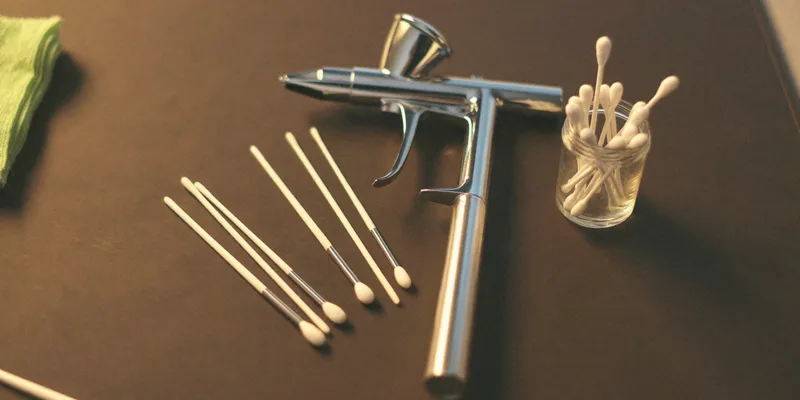
The common thirteen piece kits are all built to the same pattern: a glass jar with a metal lid and a holder for the airbrush, five graduated nylon or bristle brushes, two or three metal reamers, a nozzle wrench, a small funnel and a handful of pipe cleaners. Some add a dropper or a set of cleaning needles.
The contents are near identical between sellers because they come from the same handful of factories. That means the deciding factors are the quality of the glass pot, whether the lid seals, and how many of the brushes are useful sizes rather than filler. Ratings across the popular options sit closely together for that reason.

The Pieces You Will Use Every Session
Two brushes and the pot. The smallest bristle brush cleans the paint channel and the inside of the cup, the medium one gets around the crown cap and the nozzle housing, and the pot catches the spray while you flush. Between them they cover the routine end of session clean completely.
The pipe cleaners are the third useful item, mainly for the cup and the wide part of the channel where a brush is too stiff to reach the corners. They are consumable and cheap, so use them freely rather than trying to make each one last.

The Pieces That Stay in the Box
The tiny funnel is for decanting cleaner and most people use a dropper bottle instead. The very smallest brushes are often too soft to shift anything and too small to reach usefully. The wrench fits some airbrushes and not yours, which is the recurring complaint on these kits.
None of that makes the kit a bad purchase, because the useful items alone are worth the outlay. It does mean you should not judge your cleaning routine by how much of the kit you deploy. A well cleaned brush usually involves two items from a set of thirteen.
Reamers: Useful and Dangerous
A reamer is a fine metal rod sized to pass through a nozzle and clear a blockage. Used gently on a nozzle that is genuinely blocked with cured paint, it works. Used with any force at all, it enlarges the opening, and a nozzle that has been opened out sprays differently forever after.
The rule is to soak first, brush second, and ream only if the blockage survives both, and then with no pressure whatsoever, letting the rod find the hole rather than pushing it. Never ream a nozzle still attached to the airbrush, because you cannot feel what is happening. Our nozzle cleaning guide walks through the safe sequence in full.
Kit Contents Rated by Usefulness
If you are deciding between kits, the pot and the brush sizes are what to compare. Everything else is broadly the same wherever you buy.
| Item | How often used | What it is for | Verdict |
|---|---|---|---|
| Glass cleaning pot | Every session | Contains spray while flushing | The main reason to buy a kit |
| Bristle brushes | Every session | Cup, channel, crown cap | Two sizes do all the work |
| Pipe cleaners | Often | Cup corners and wide channel | Consumable, buy more |
| Metal reamers | Rarely | Cleared cured blockages | Last resort, easy to overdo |
Kit or Assemble Your Own?
Assembling your own is entirely possible and some people prefer it, because you can pick a heavier glass pot and better brushes. It also costs more effort than most hobbyists want to spend on a job they resent, and the individual items are awkward to source in the right sizes.
The pragmatic route is to buy a standard kit, discover which three items you actually use, and then upgrade only those. Most painters end up with a kit box in a drawer, two brushes on the bench and a separately bought cleaning pot that is nicer than the one they started with.

What the Kits Leave Out
Cleaner. Almost none of these kits include a usable quantity of cleaning fluid, and the ones that include a small bottle include far less than a single deep clean uses. Budget for a large bottle in the same order or the kit sits unused until you buy one.
They also leave out spare O-rings and needle lubricant, which are the two consumables that keep a brush feeling new. Those live in the maintenance conversation rather than the cleaning one, and our airbrush maintenance schedule covers what to keep in the drawer. For the fluid itself, see the airbrush cleaner comparison.

Storage and the Box Itself
The clamshell case is more useful than it looks, mainly because reamers and small brushes are exactly the kind of item that vanishes into a hobby drawer. Keeping them in the molded tray means you can find the one you want in the middle of a clean, with cleaner on your hands.
The glass pot usually does not fit back in the case once you have used it, and that is fine. It wants to live on the bench next to the airbrush holder, because a cleaning pot you have to fetch is a cleaning pot you will not use.
Frequently Asked Questions
Do I need an airbrush cleaning kit or just cleaner? Cleaner is the essential part. A kit adds the brushes and pot that make the end of session clean quicker and less messy. If you are choosing one thing, buy the cleaner. If you are buying both, get the kit at the same time because the pot changes how willing you are to flush properly.
Are the metal reamers safe to use? Only with care, and only when soaking and brushing have failed. They can enlarge a nozzle opening permanently, which changes the spray pattern and cannot be undone. Let the reamer find the hole under its own weight and never push it, and never use one while the nozzle is on the brush.
Are the cheap kits as good as the expensive ones? Broadly yes, because the contents come from the same sources and the differences are in the pot and the brush quality. Look at whether the jar is glass rather than plastic and whether the lid holds the airbrush securely, because those are the parts you handle constantly.
How often do the brushes need replacing? When the bristles splay or go soft, which for a hobbyist is a matter of years rather than months. Rinse them after use rather than letting cleaner dry in the bristles and they last considerably longer. Pipe cleaners are single use and should be treated that way.
Does the wrench in the kit fit my airbrush? Possibly not. Nozzle wrenches are brand specific and the generic one supplied is a rough fit at best. Use the wrench your airbrush came with if it had one, and check the manufacturer’s parts list before you apply a generic tool to a nozzle you cannot easily replace.
The Bottom Line
A cleaning kit is worth the money for the glass pot and two of the brushes, and the rest is packaging. Treat the reamers as an emergency tool rather than part of the routine, and remember that no kit includes enough cleaner to matter, so order a large bottle alongside it. Read next: the full cleaning routine and our airbrush cleaning pot guide.