Last updated: August 23, 2026
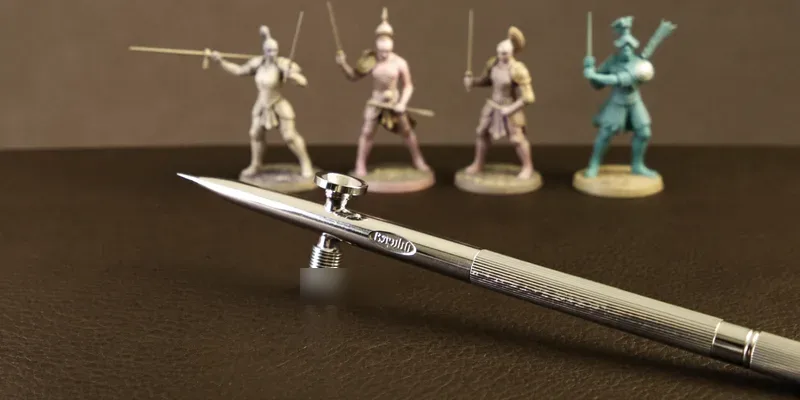
Badger is the brand that American modelers keep quietly recommending while the internet argues about Japanese and German brushes. It does not have the chrome, it does not have the marketing budget, and its model numbers read like a parts bin: 105, 150, 155, 200, 360. Underneath that is a company building airbrushes in the United States with a parts counter that answers the phone.
The catalog is genuinely confusing on a first visit, though, and the numbers tell you nothing about what each brush is for. This page sorts the range into the four decisions that actually matter to someone painting models at a kitchen table.
This article contains affiliate links. If you buy through them, we may earn a commission at no extra cost to you. Learn more.
Quick Answer
Which Badger airbrush should you buy?
- One brush for everything on models: the Patriot 105.
- Fine detail and freehand as the priority: the Sotar 20/20.
- You want two needle sizes in one body: the Krome.
- You already own bottles and spray large areas: the 150, which runs gravity or siphon.
Bottom line: Badger sells on serviceability and domestic parts rather than on chrome, and the Patriot is the default.
What Badger Is Good At
Two things: brushes you can strip without ceremony, and parts you can get in the United States without an international order. Badger Air-Brush Co. builds in Illinois and sells its needles, nozzles and seals as ordinary catalog items, which is why you still see decade old Badgers working on club tables.
The design philosophy follows from that. Badger heads tend to be chunkier and more forgiving than the finest European equivalents, and the brand leans toward brushes that keep spraying rather than brushes that spray the thinnest possible line.
Where That Puts It Against Iwata and the Germans
Roughly level on results and different in feel. A Patriot will not out atomize a well set up Evolution at the very bottom of the pressure range, and it will shrug off a session of primer that a fine nozzle would resent. Painters who value repairability over refinement land on Badger and stay there.
The Patriot 105: The One Most People Should Buy
The Patriot is a gravity feed, dual action brush that Badger lists with a 0.5mm needle and nozzle and a permanently mounted cup. On paper 0.5mm sounds far too coarse for figures, and in practice it is not, because Badger uses a two angle needle taper that lets one head cover a wide range of spray widths.
That single head design is the point of the brush. There is no tiny threaded nozzle to crack, no set of conversion parts to lose, and cleaning is a wipe and a backflush rather than a procedure.

Who Should Skip It
If your painting is mostly hairline freehand, camouflage on 1/72 aircraft, or eye level detail, a finer brush is a better tool and the Patriot becomes the second brush. Our full Patriot 105 review goes through where its limits sit.
Sotar 20/20 and Krome: The Detail End
The Sotar 20/20 is Badger’s precision brush, listed with a fine 0.2mm setup and sold in sets that add larger conversions. It is the one to pick when the work is small, the paint is thin, and the pressure is low. It also demands the discipline that goes with a fine nozzle: better thinning, cleaner air, and cleaning before the paint dries rather than after.
The Krome takes a different route by shipping two needle and nozzle sizes with one body, so a single brush covers detail and coverage with a head swap rather than a second purchase.

Head Swapping Is Not Free
Every conversion set is another set of small parts to keep track of, and swapping mid session means cleaning twice. Many painters find that two dedicated brushes beat one convertible brush in practice, which is worth thinking about before paying for versatility you will not use.
The 150 and the Older Workhorses
The 150 is the classic Badger: a dual action brush that runs from a gravity cup or a siphon bottle depending on what you attach, with interchangeable head sizes. It suits painters who spray large volumes of one color, do terrain work, or already own bottles from another system.
The single action models further down the range are simpler tools for flat coverage. They are honest about what they do and they are not the brush to learn shading on, which is covered in our dual action versus single action guide.

The Badger Range at a Glance
The four models that matter for modeling work, with the manufacturer’s own nozzle figures and the job each one is built for.
| Model | Feed | Head setup | Buy it for |
|---|---|---|---|
| Patriot 105 | Gravity, fixed cup | Single 0.5mm, two angle needle | Everything, as one brush |
| Sotar 20/20 | Gravity | Fine 0.2mm, larger sets available | Freehand and fine detail |
| Krome | Gravity | Two needle sizes supplied | Detail plus coverage in one body |
| Model 150 | Gravity or siphon | Interchangeable head sizes | Volume work and terrain |
How these compare with the Japanese and German ranges is set out in our airbrush brands comparison.
Parts, Service and the Long Game
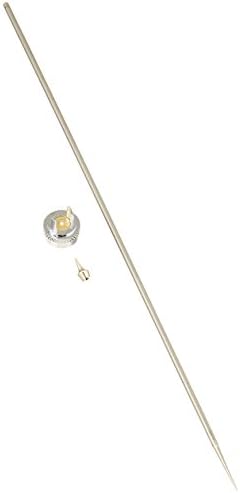
This is the reason to choose Badger over a similarly priced import. Needles, nozzles, seals and cups are ordinary stocked items, the model numbers stay in the catalog for years, and repairs are the expected outcome of a broken part rather than a reason to replace the brush.
Budget for a spare needle when you order the brush. It is the part that bends, it always bends at an inconvenient moment, and having one in the drawer converts a lost weekend into five minutes. Our page on replacement parts covers what to keep on hand.
Frequently Asked Questions
Is a 0.5mm Badger really fine enough for miniatures? Yes, for the great majority of miniature work. Badger’s two angle needle means the spray narrows further than the headline number suggests, and the same head handles primer without clogging. Very fine freehand is where you would want the Sotar instead.
Are Badger airbrushes made in the USA? Badger Air-Brush Co. manufactures in Illinois and stocks its own spare parts domestically. That is the practical advantage of the brand: parts arrive quickly and the catalog stays stable, which is not true of every imported budget brush.
Patriot 105 or Iwata Eclipse HP-CS? Very close, and the tie breaker is usually parts and feel. The Eclipse has a compression fit nozzle and the deepest dealer network; the Patriot has a single simple head and domestic support. Read the Eclipse review and pick on which support story you prefer.
Which Badger is best for a beginner? The Patriot, because the one piece head removes the mistake that ruins most first airbrushes. A beginner with a fine detail brush spends the first month diagnosing clogs instead of learning trigger control.
Do I need a special compressor for a Badger? No, any regulated hobby compressor with a moisture trap will do. The wider heads are actually less fussy about air than fine nozzles are. Our compressor guide explains what to look for.
Can I use Badger paints with other brands of brush? Yes, and the reverse is also true. Paint compatibility is about thinning and pigment size, not brand loyalty, which our guide to airbrush paint works through.
The Bottom Line
Badger is the pragmatic choice: American built, easy to service, and organized around brushes that keep working rather than brushes that impress on a spec sheet. Start with the Patriot 105 unless your work is genuinely detail led, in which case the Sotar is the one. The 150 remains the answer for volume and terrain, and the whole range benefits from a parts supply you can actually reach. Read next: the Patriot 105 in detail, or the Paasche lineup for the other American classic.