Last updated: August 23, 2026
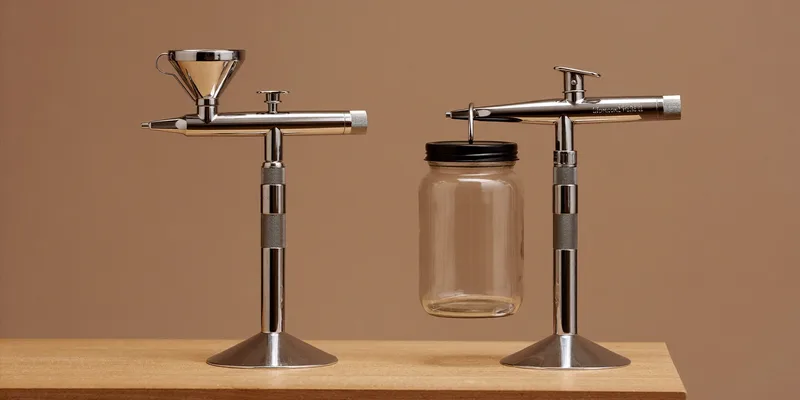
Feed type is where the paint sits and how it gets to the nozzle. A gravity feed brush has a cup on top and lets the paint fall in. A siphon feed brush pulls paint up from a bottle hanging underneath. A side feed sits between them with a small cup on one side, usually swappable left or right.
For hobby painting, one of these has won the argument, and it is worth understanding why rather than just taking the recommendation. The reason is paint volume, not performance.
This article contains affiliate links. If you buy through them, we may earn a commission at no extra cost to you. Learn more.
Quick Answer
Gravity feed or siphon feed for model painting?
- Gravity feed for miniatures and models. It works at lower pressure and wastes almost no paint.
- Siphon feed for large single color jobs, because a bottle holds far more than a cup.
- Side feed is a niche compromise that keeps the sight line clear over the model.
- Cup size is the specification to check: too small means constant refills, too large is just bulk.
Bottom line: gravity feed is the right default for hobby work, and searches for it outnumber siphon by a wide margin for good reason.
How Each One Moves Paint
Gravity feed uses the weight of the paint itself. The cup sits above the nozzle, paint falls into the passage, and the airflow only has to atomize it. Siphon feed has to lift paint from a bottle below the brush, which takes more air, which in practice means more pressure.
That is the whole mechanical difference, and every practical consequence follows from it: pressure, paint waste, cleaning time and how much paint you can hold at once.
The Pressure Consequence
Because a gravity feed does not have to lift anything, it will spray properly at low pressure. That matters enormously for miniatures, where low pressure is how you get a controlled, soft coat instead of a dusty one. A siphon feed brush at the same low pressure will sputter or simply not pull paint.
Why Hobby Painters Choose Gravity Feed
Three reasons, all practical. It sprays at low pressure, which suits thinned acrylic on small models. It wastes almost no paint, because you mix a few drops in the cup and use them. And a color change is a cup flush rather than a bottle swap plus a line clean, which matters when you change color eight times an evening.
The last one is underrated. Most hobby sessions involve many colors in small quantities, which is precisely the workload gravity feed is shaped for.
Cup Size Is the Real Specification
Small cups suit miniature painters mixing a few drops of a glaze. Larger cups suit gunpla and scale modelers covering an airframe or an armor set without stopping. If you are choosing between two versions of the same brush, cup size is usually the only meaningful difference, and it should follow the size of what you paint.
When a Siphon Feed Is the Right Tool
Siphon feed earns its place on volume. A bottle holds far more paint than any cup, so a single color job over a large surface runs without interruption, and you can keep several bottles pre mixed and swap between them. Terrain, large scale armor, and priming batches are all sensible siphon feed work.
The costs are higher pressure, more paint left in the bottle and line at the end, and a longer cleaning routine when you do change color.
Side Feed, and Who It Suits
Side feed puts a small cup on one side of the body, often swappable to either side, which keeps the top of the brush clear so you can see over it. Painters working on detail at an awkward angle sometimes prefer it. It is a genuine niche rather than a compromise everyone should consider.
Which to Buy for Your Work
If you paint miniatures, gunpla or scale models, buy a gravity feed brush and size the cup to your subject. Add a siphon feed later only if you find yourself priming batches or covering large surfaces in one color often enough that refilling a cup becomes the annoying part of the session.
Three options that cover the usual starting points.
Gravity Feed, Budget
The Gaahleri Mobius is a 0.3mm gravity feed brush aimed at hobby painters, with a smoother trigger than the brand’s entry model. It comes apart quickly for cleaning, which is the daily reality of gravity feed work.

Gravity Feed, Long Term
The Iwata Eclipse HP-CS pairs a 0.35mm nozzle with a cup large enough for a full airframe or a unit of infantry in one fill. It is the gravity feed brush most often recommended to someone who wants to buy once.

Siphon Feed, Done Simply
The Paasche H is the American siphon feed classic: single action, easy to strip, and happy running a bottle of primer all afternoon. As a second brush for volume work it is a sensible, unfussy choice.

Feed Types Compared
The differences that show up in an actual painting session, rather than the ones printed on a specification sheet. Capacity and working pressure are the two columns that decide most purchases, because between them they determine how often you refill and how low you can turn the regulator before the brush protests.
| Feed type | Works at low pressure | Paint capacity | Best suited to |
|---|---|---|---|
| Gravity feed | Yes | Small to medium cup | Miniatures, gunpla, most models |
| Siphon feed | Needs more pressure | Large bottle | Terrain, big single color jobs |
| Side feed | Yes | Small cup | Detail work with a clear sight line |
| Bottom feed cup | Mostly | Medium | Mixed use, fewer refills than a top cup |
Trigger type is a separate decision that often comes bundled with this one, and it is covered in our dual versus single action guide.
Cleaning Differences That Matter Daily
A gravity feed color change is a cup wipe, a flush of cleaner and a backflush, and you are painting again in under a minute. A siphon feed change means swapping the bottle, clearing the pickup tube and flushing the line, which is several minutes each time. Over an evening of eight color changes that difference is the evening.
Neither is harder to deep clean at the end of a session. Both come down to needle, nozzle and passage, which our cleaning walkthrough covers in order.
Frequently Asked Questions
Is gravity feed better than siphon feed? Better for hobby work, because it sprays at low pressure, wastes little paint and changes color quickly. Siphon feed is better when you need volume in one color. Neither is a higher quality design.
Does a gravity feed cup spill? Only if you tip the brush past a fairly steep angle, and most cups have a lid for exactly that. Setting the brush down flat on the table is the usual cause, which is what an airbrush holder is for.
How big a cup do I need for miniatures? Small is fine. Miniature work uses a few drops of thinned paint at a time and a large cup just means more surface for paint to dry on. Gunpla and larger scale models are where a bigger cup earns its keep.
Can I use a siphon feed for miniatures? You can prime and basecoat with one. Fine control at low pressure is where it struggles, so glazes and soft transitions will be frustrating. Most miniature painters who own one keep it for primer.
Why does my siphon feed brush sputter? Often not enough pressure to lift the paint, or a partly blocked pickup tube, or paint too thick to be drawn up. Check pressure first, since it is free. Our page on sputtering works through the rest.
Is side feed worth seeking out? Only if the cup on top genuinely gets in your way, which happens with certain detail work and awkward angles. For most painters it adds a purchasing constraint without adding capability.
The Bottom Line
Gravity feed drops paint into the nozzle, siphon feed lifts it from a bottle, and everything else follows from that. Gravity feed sprays at the low pressure hobby work needs, wastes very little paint and changes color in under a minute, which is why it is the default for miniatures, gunpla and scale models. Keep siphon feed in mind as a second brush for volume work in a single color. Read next: dual versus single action, and choosing an airbrush for miniatures.