Last updated: August 23, 2026
Harder and Steenbeck has spent the last few years becoming the brand miniature painters mention first, helped by a search presence that puts it at the top of almost every airbrush query in this hobby. Interest in the name has more than doubled in a year. The brushes deserve a good share of that, and the advertising is doing the rest.
The problem for a buyer is the naming. Ultra, Evolution and Infinity, each with year designations, two in one variants, ALplus and CRplus suffixes and artist editions, is a lot of vocabulary for a decision that comes down to three questions. This page answers those three.
This article contains affiliate links. If you buy through them, we may earn a commission at no extra cost to you. Learn more.
Quick Answer
Which Harder and Steenbeck airbrush should you buy?
- First German brush, and most people’s last: the Ultra.
- You want two cup sizes and a more refined body: the Evolution.
- You do fine freehand at very low pressure: the Infinity.
- You spray lacquers and aggressive thinners: look for the CRplus designation.
Bottom line: current nozzle sets are shared across the range, so the Ultra is upgradable rather than a dead end.
What CRplus and ALplus Actually Mean
CRplus marks the versions built to resist solvents, with PTFE seals at the nozzle, needle, cup joint and valve. If you spray lacquer based paints or clean with harsh thinners, that sealing is what stops the brush degrading from the inside. ALplus refers to the versions with a lighter aluminum body.
Neither suffix changes how finely the brush sprays. They change what you can put through it and how it feels in the hand, which is a different question from performance.
Do You Need CRplus?
If you spray water based acrylics and clean with an acrylic cleaner, no. If you use lacquer thinner, Tamiya style cleaners or hot solvents, yes, and our guide to lacquer versus acrylic explains what those products do to seals in any brush.
The Ultra: The One Most Painters Should Buy
The Ultra is the simplest brush in the range and, for miniature work, the one that ends the search. Harder and Steenbeck lists the current version with 0.28mm and 0.45mm nozzle options, both self centering, and states that current Evolution and Infinity nozzle sets also fit it. That compatibility is the single most useful fact in this article.
It means the entry brush is not a lesser mechanism, it is the same mechanism with fewer luxuries. Fewer parts also means fewer things to lose during a deep clean, which suits a bench that gets packed away before dinner.
The Evolution: The Comfortable Middle
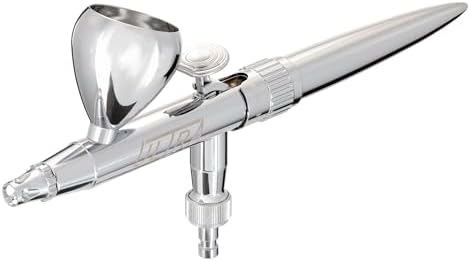
The Evolution adds refinement rather than a different class of spray. The current CRplus two in one is sold with both the 0.28mm and 0.45mm nozzle sets and two cup sizes, so one brush covers a tiny glaze batch and a full session of basecoating without compromise.
Harder and Steenbeck describes the newer 0.28mm and 0.45mm sets as more robust and less prone to clogging than the older 0.2mm and 0.4mm they replaced, which is a rare case of a manufacturer admitting the old fine nozzle was fussy.

Evolution or Ultra?
Two cups and a slightly nicer body, essentially. Our Ultra versus Evolution comparison works through whether that is worth the step for the way you actually paint.
The Infinity: The Specialist
The Infinity is the top of the range, sold in 0.15mm, 0.2mm and 0.4mm nozzle options or as a two in one with the 0.15mm and 0.4mm sets and two cups. It adds a needle stop so you can limit trigger travel and repeat the same line width, plus triple plating and PTFE sealing on the CRplus versions.
It is also the brush most often bought unnecessarily. A 0.15mm nozzle demands very well thinned paint, clean dry air and immediate cleaning, and it punishes casual habits. Buy it because you do fine freehand, not because it is the most expensive one.

The Range Compared
Three families and the nozzle sets each is sold with, using the manufacturer’s published figures.
| Model | Nozzle options | Distinguishing feature | Right for |
|---|---|---|---|
| Ultra | 0.28 or 0.45mm | Fewest parts, takes current shared sets | Most miniature and model painters |
| Evolution | 0.28 and 0.45mm two in one | Two cup sizes, more refined body | Frequent switching between jobs |
| Infinity | 0.15, 0.2 or 0.4mm | Needle stop for repeatable line width | Fine freehand specialists |
| CRplus versions | Same sets | PTFE sealing throughout | Anyone using solvent based paints |
How the brand compares with the Japanese and American ranges is in our brands comparison.
Special Editions and What They Change
Artist editions, including the well known Giraldez versions, appear regularly with different finishes and occasionally different cup or nozzle combinations. Mechanically they are the same brushes underneath, and they are priced for the collector rather than for the improvement.
Buy one because you like it. Do not buy one expecting a different spray, because the nozzle set determines that and it is the same catalog part.
Buying: Amazon or a Hobby Dealer
Both. The mainstream models turn up on Amazon regularly, while specific nozzle sets, two in one variants and special editions are often easier to find at hobby dealers who carry the whole catalog. Check which exact variant a listing is selling, because the model names are similar and the differences are not cosmetic.
Wherever you buy, order a spare nozzle set with the brush. It is the part that ends a painting session, and it is the part that is out of stock when you need it.

Frequently Asked Questions
What does CRplus stand for on a Harder and Steenbeck? It marks the solvent resistant build, with PTFE seals at the nozzle, needle, cup joint and valve. It matters if you spray lacquer based paints or clean with strong thinners, and it makes no difference to how finely the brush atomizes water based acrylics.
Is the Ultra a beginner brush? It is the simplest in the range, not a lesser one. It uses the same current nozzle sets as the Evolution and Infinity, so it sprays in the same class. Many painters buy an Ultra and never feel a reason to move up.
Why did the nozzle sizes change to 0.28mm and 0.45mm? The manufacturer positions the newer sets as more robust and less clog prone than the 0.2mm and 0.4mm they replaced, while giving comparable or better detail. Older nozzle sets still exist, so check which generation a listing is selling.
Do I need the Infinity for miniature painting? Almost certainly not. The needle stop and the 0.15mm nozzle are for repeatable hairline work, and they demand very thin paint and clean air. Most painters get better results from an Ultra plus better thinning habits.
Are parts interchangeable across the range? The current nozzle sets are shared between Ultra, Evolution and Infinity, which is unusual and genuinely useful. Needles, seals and cups are catalog items, and our parts guide covers what to stock.
Is Harder and Steenbeck worth it over a budget brand? It buys atomization at low pressure, trigger nuance and parts continuity. If your current limit is thick paint or pulsing air, none of that helps. Our ladder comparison sets out when the step is justified.
The Bottom Line
Ignore the naming and answer three questions: do you need two cup sizes, do you spray solvents, and do you genuinely do hairline freehand. Most miniature painters answer no, no and no, which points at the Ultra, and the shared current nozzle sets mean that choice does not lock you out of anything later. The Evolution is the comfortable middle, the Infinity is a specialist tool bought too often, and CRplus is a sealing specification rather than a performance upgrade. Read next: Ultra against Evolution, or the Evolution against the Iwata Eclipse.