Last updated: August 23, 2026
Thinner is the cheapest thing on the shelf that changes your results the most, and it is also the one people buy last. The usual sequence is airbrush, compressor, paint, three bad sessions, then a search for why the paint keeps spitting, and only then a bottle of thinner.
The complication is that there is no such thing as a universal thinner. Each paint family has its own, they are not interchangeable, and putting the wrong one in the cup ranges from disappointing to genuinely messy. This guide matches the bottle to what you are already spraying.
This article contains affiliate links. If you buy through them, we may earn a commission at no extra cost to you. Learn more.
Quick Answer
Which airbrush thinner do you need?
- Water based acrylics for miniatures: the matching brand airbrush thinner, Vallejo being the common default.
- Tamiya acrylics: X-20A, because the range leans alcohol based rather than plain water based.
- Createx and similar textile or automotive paint: the brand reducer, not a miniature thinner.
- Lacquer: the brand lacquer thinner, with the ventilation its safety data sheet calls for.
Bottom line: buy the thinner that belongs to your paint. Cross mixing families is where finishes go wrong.
What a Thinner Is Doing
It reduces the viscosity of paint so the airbrush can break it into a fine mist, and it does that without stripping out the binder that makes the paint stick. That second half is the whole reason a purpose made thinner beats water: you are replacing carrier, not diluting the film.
Most thinners also carry additives that help the paint flow and slow drying slightly at the tip. That is why a well thinned mix suffers less tip dry than the same paint cut with water to the same consistency.
For Water Based Acrylics: the Brand Thinner
If you paint miniatures with a water based acrylic range, buy that brand’s airbrush thinner and stop thinking about it. Vallejo describes its 71.161 Airbrush Thinner as extending the color and increasing fluidity while leaving the properties of the paint unchanged, which is exactly the job description.
Brands are broadly compatible within the water based family, so a Vallejo thinner in a different water based paint is not a disaster and plenty of people do it. Staying within one maker simply removes a variable when something misbehaves. Our Vallejo thinner article covers that bottle in detail.

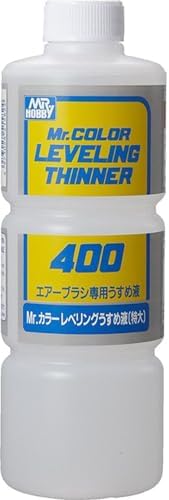
For Tamiya Acrylics: X-20A
Tamiya is the exception that catches people out. Its acrylics lean alcohol based rather than plain water based, and X-20A is the thinner formulated for them. Thinning Tamiya acrylic with water is possible but it tends to behave badly, breaking up on the surface instead of leveling.
The practical rule is that Tamiya paint wants Tamiya thinner, and the same is true of the lacquer side of the range with its own products. Our Tamiya paint guide explains where the alcohol base helps you, which is mostly in how quickly a coat becomes touch dry and takes masking tape.

For Createx: the Reducer, and a Warning
Createx calls its thinner a reducer, and lists 4011 Reducer as the recommended thinner for its paints and clears, describing it as water based and typically added at around ten percent by volume. If you are spraying Createx, that is the bottle.
The warning is about what Createx is for. It is textile and automotive paint with a heavier film than miniature acrylics, and it is the wrong choice for detailed models regardless of how you thin it. Our Createx article sets out where that boundary sits, because the brand shows up constantly in airbrush searches for reasons that have nothing to do with models.

For Lacquer: Brand Thinner and Real Ventilation
Lacquer thinners are the strong end of the shelf. They spray beautifully and level almost by themselves, and they carry solvent handling requirements that water based products do not. The ventilation and protective equipment you need are set out on the manufacturer’s safety data sheet for the specific product, and that sheet is the source to follow rather than anything you read on a forum.
They also attack materials. Some airbrush seals do not tolerate strong solvents, and a brush that has been run with lacquer thinner may need its seals replaced sooner. Our comparison of lacquer against acrylic covers the whole trade including the cleanup.
Matching the Bottle to the Paint
One table, and it is the whole decision. Find your paint on the left and buy what is next to it.
| Paint you spray | Thinner to buy | Cleans up with | Note |
|---|---|---|---|
| Water based miniature acrylic | Brand airbrush thinner | Water and airbrush cleaner | Cross brand within the family usually fine |
| Tamiya acrylic | X-20A | Its own cleaner or alcohol | Water thinning behaves poorly |
| Createx and textile paint | 4011 Reducer | Water and brand cleaner | Not the right paint for detailed models |
| Lacquer | Brand lacquer thinner | Brand lacquer cleaner | Follow the safety data sheet for ventilation |
Thinner, Flow Improver, Retarder and Cleaner
Four bottles that look similar and do different things. Thinner adjusts consistency. Flow improver keeps paint moving at the tip and fights tip dry. Retarder slows drying overall for blending. Cleaner strips paint out of the brush and belongs nowhere near your mix.
Painters mix up the last one most often, usually because an airbrush cleaner is thin and clear and sitting right there. Using cleaner as a thinner breaks down the paint film and gives you a coat that will not stick. Keep them at opposite ends of the bench if that helps.
What to Buy First
The thinner, every time. It is the bottle that fixes the problems a new painter is actually having, and it is the one you will empty. Flow improver comes second, when paint starts crusting on the needle often enough to interrupt you, and a retarder only if you are doing long smooth blends in a warm dry room.
Buy the large size of whichever thinner matches your main paint family. It keeps well closed, it is the fastest consumable on the bench, and running out mid session is a genuinely annoying way to end an evening.
Frequently Asked Questions
Can I use one thinner for all my paints? Only within a family. A water based thinner covers most miniature acrylics regardless of brand, but Tamiya acrylics want X-20A and lacquers want their own. Buying one bottle per family you actually use is the sensible middle ground.
Is airbrush thinner the same as airbrush cleaner? No, and this is the most consequential mix up on the shelf. Thinner adjusts paint so it sprays. Cleaner is designed to break paint down and flush it out. Cleaner in your paint gives you a film that never properly adheres.
Can I make my own thinner? Recipes circulate, usually built on distilled water with a flow aid and sometimes a little alcohol. They work well enough for practice and terrain. For models you care about, the commercial bottles are inexpensive and consistent, which is worth more than the saving.
How much thinner do I add? Start around four or five drops of paint to one of thinner for an airbrush range and adjust by eye toward the consistency of milk. Our guide to thinning acrylic paint covers how to judge it and what each mistake looks like.
Does thinner have a shelf life? These bottles last a long time if kept closed and out of the sun, and the failure mode is usually contamination from a dirty pipette rather than age. Do not return unused mixed paint to a thinner bottle.
The Bottom Line
Match the thinner to the paint family and most of the confusion disappears. A brand airbrush thinner for water based miniature acrylics, X-20A for Tamiya, the Createx reducer if you are spraying Createx at all, and a brand lacquer thinner with the ventilation its safety data sheet requires. Keep the cleaner separate from the mixing end of the bench, and treat thinner as a consumable you always have a spare of. Read next: how to thin acrylic paint step by step and choosing an airbrush paint family.