Last updated: August 23, 2026
The first time you flush an airbrush into a wad of paper towel you find out where the rest of it goes. A fine haze of cleaner and pigment leaves the towel, drifts across the table and settles on everything within a couple of feet, including the model you just finished. By the third session there is a faint gray bloom on the desk lamp.
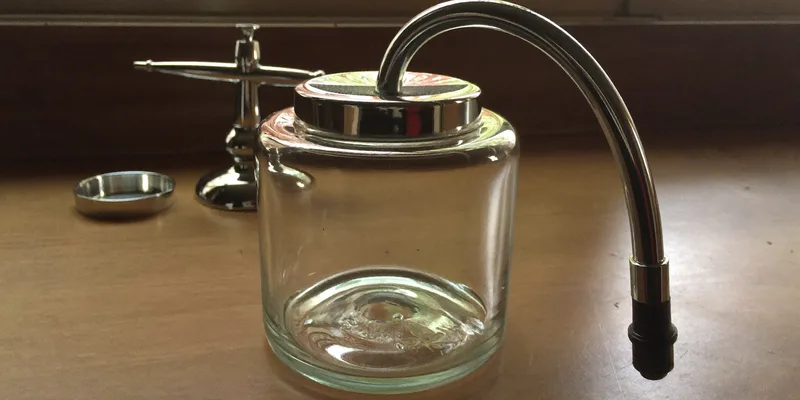
A cleaning pot solves that for very little money. It is a jar with a lid, a hole for the airbrush and a filter to slow what comes back out, and it is the piece of gear people are most surprised they waited so long to buy. Here is what separates a good one from a jam jar with a hole punched in the top.
This article contains affiliate links. If you buy through them, we may earn a commission at no extra cost to you. Learn more.
Quick Answer
Do you need an airbrush cleaning pot?
- If you clean anywhere near where you live, yes. It contains the spray instead of misting the room.
- Glass jars survive solvent cleaners. Plastic ones can craze or soften with the stronger fluids.
- The filter in the lid is what stops blowback. A pot without one is just a jar.
- A pot is not a spray booth. It handles cleaning mist, not painting overspray.
Bottom line: glass body, filter lid, and a holder for the brush. That combination costs very little and keeps the bench clean.
What a Cleaning Pot Is For
Containment. When you flush cleaner through an airbrush the liquid atomizes exactly as paint does, so it leaves the nozzle as a mist rather than a stream. A pot gives that mist somewhere to condense and settle, so it ends up in a jar rather than on your desk, your model and the air in front of you.
The good ones add two things beyond a container: a rubber grommet that seals around the nozzle so the spray goes in rather than around, and a filter under the lid that catches what tries to come back out. Both matter more than the size of the jar.

Glass or Plastic
Glass, if you have the choice. Solvent cleaners can craze, cloud or soften some plastics over time, and the pot is one of the few pieces of gear that sits with cleaner in it constantly. Glass also has weight, which matters because a light pot skids across the desk when you push the brush into the grommet.
Plastic pots are lighter, cheaper and impossible to break, which suits a setup that gets packed away in a box after every session. If you only ever use water based cleaner, plastic is genuinely fine. The moment lacquer thinner enters the routine, glass is the safer container.
The Filter Lid and Why It Matters
Air has to leave the pot. You are pushing a continuous stream of compressed air into a sealed jar, so if there is no controlled exit the pressure finds one, usually back around the nozzle and into your face. That is the blowback people complain about with improvised jars.
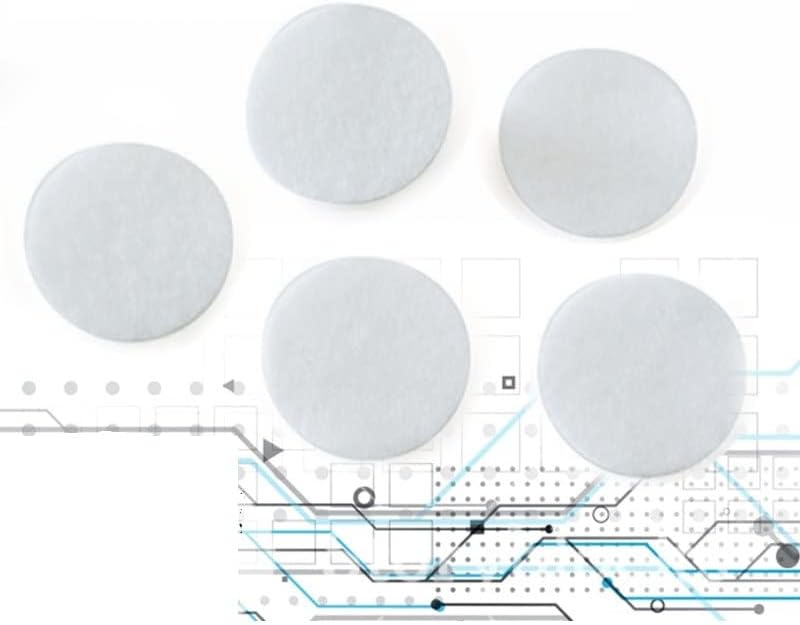
A proper lid has a vent covered by a filter pad or a fine mesh, which lets the air escape while catching the pigment carried with it. When the filter darkens, replace or wash it, because a clogged filter puts you straight back to blowback. This is the single component that separates a purpose made pot from a jam jar.
Pot Versus Booth
They solve different problems and neither replaces the other. A cleaning pot handles the concentrated mist of a flush, which is a short, contained event. A spray booth handles the much larger volume of overspray produced while you are actually painting, and vents it away from the room.
If you have a booth, you can flush into a pot placed inside it and let the booth take whatever escapes, which is the tidiest arrangement. If you do not, the pot is still the right purchase, and it costs a fraction of what a booth does. Our airbrush spray booth guide covers the painting side of the same problem.

Cleaning Pots Compared
Four common formats, with the trade each one makes. Most kits ship with the first type, which is why so many people never buy a second.
| Type | Body | Strength | Weakness |
|---|---|---|---|
| Kit glass pot | Glass, metal lid | Cheap, comes with most kits | Small, lid seal can be loose |
| Pot with holder | Glass plus clamp | Holds the brush between colors | Takes more bench space |
| Plastic pot | Molded plastic | Light, unbreakable, portable | Solvents can attack it |
| Improvised jar | Any jar | Free | No filter, blowback in your face |
The Mist You Do Not See
Flushing atomizes cleaner into the air in the same way spraying atomizes paint, and that is worth taking seriously rather than dramatizing. A pot with a working filter keeps most of it in the jar, which is the point of owning one. Clean where you paint, with the same window open or the same extraction running.
If you use solvent based cleaners, the manufacturer’s safety data sheet for that product is the authority on handling and ventilation, and it is worth reading once rather than guessing. Our airbrush ventilation page covers the room, and the fluids themselves are compared in our airbrush cleaner guide.
Emptying and Maintenance
The jar fills with a sludge of cleaner and pigment and needs emptying periodically, and how you dispose of that depends on the product and your local rules. Water based cleaner residue is a different question from solvent waste, and the safety data sheet for the product tells you what the manufacturer advises.
The filter needs attention more often than the jar does. Once it is saturated it stops venting properly and the pot starts pushing back at you. Most pots take a generic filter pad and some people cut their own from booth filter material, which works and costs almost nothing.
Making Your Own
It is a jar, a hole and a filter, so a homemade version is entirely reasonable. Use a glass jar with a metal lid, drill a hole sized for a rubber grommet, add a second vent hole and tape a piece of filter foam over the inside of it. That is functionally the same as the commercial product.
The reason most people buy rather than build is that the commercial pots cost so little that the drilling is not worth the evening. Where a homemade version genuinely wins is size: a larger jar means emptying it less often, and nobody sells a big one.
Frequently Asked Questions
Can I just spray into a paper towel? You can, and plenty of people do, but a surprising amount of the mist misses the towel and settles on everything nearby. If you clean at a dining table or in a room where people spend time, a pot is the better answer and costs very little.
Is a glass or plastic cleaning pot better? Glass, if you use solvent cleaners, because some plastics craze or soften with repeated exposure. Glass is also heavier, which stops the pot sliding when you push the brush into the grommet. Plastic is fine for water based cleaning and better if the pot travels.
Why does cleaner spray back at me from the pot? The air has nowhere to go. Either the vent filter is saturated or the pot has no vent at all, so the pressure escapes back around the nozzle. Replace or wash the filter pad, and check that the grommet is not sealing so tightly that the jar becomes airtight.
Do I still need a spray booth if I have a cleaning pot? They cover different things. The pot handles cleaning mist, the booth handles painting overspray, and a booth also gives you extraction while you work. If you can only have one and you paint indoors regularly, the booth does more, but the pot is far cheaper.
How often should I empty it? When the sludge is deep enough to reach the spray, or when the smell tells you it is time. There is no schedule. Disposal depends on what cleaner you use, so check the manufacturer’s safety data sheet and your local rules rather than assuming it goes down the sink.
The Bottom Line
A glass pot with a grommet and a working filter lid is one of the cheapest upgrades in the hobby and the one that most improves cleaning at a table you also eat at. Keep the filter fresh, empty the jar before the sludge reaches the nozzle, and remember that a pot handles cleaning mist while a booth handles painting overspray. Read next: the cleaning routine and our airbrush cleaning kit review.