Last updated: August 23, 2026
The reason the airbrush stays in the box is rarely the airbrush. It is the twenty minutes of setup before you can spray anything and the twenty minutes of clearing away before dinner, on a table that belongs to the whole household. Paints live in a shoebox, the hose is under the sofa, and by the time everything is out you have lost the evening.
A paint station is the fix for that, and it is not one product. It is a small set of decisions about where the paint lives, where the light comes from and how fast the whole thing disappears when someone needs the table. Get those right and a spare hour actually becomes painting time.
This article contains affiliate links. If you buy through them, we may earn a commission at no extra cost to you. Learn more.
Quick Answer
What do you actually need in a miniature paint station?
- Paint you can see and reach without standing up. A rack beats a box.
- A defined work surface, so cleanup is one object rather than a whole table.
- Light from the side and above, not from behind your head.
- A pack down plan if the table is shared. Everything else follows from that.
Bottom line: buy storage and light first. The furniture is the least important part of a paint station.
What a Paint Station Actually Solves
Friction. Every minute between deciding to paint and putting paint on a model is a minute where something else can interrupt you. A station collapses that gap by keeping the paint visible, the tools in one place and the surface ready, so a free evening turns into painting rather than into logistics.
It also solves a quieter problem. Paint that sits in a closed box gets forgotten, separates and thickens, and the colors you own stop being colors you use. Racked bottles you can see are bottles you shake and spend.
Start With the Footprint, Not the Furniture
Measure the space you will genuinely be allowed to occupy, then buy for that number. Most kitchen table setups get somewhere between a placemat and a cutting board of permanent territory. A station that needs more than that gets moved, and a station that gets moved every session is a station you stop using.
If your space is temporary, the question changes from what fits to what stows. A shallow tray that slides onto a shelf with the paints still in it beats a handsome bench you have to unload every evening.
Airbrushing Needs More Room Than Brush Work
An airbrush adds a hose, a compressor and either a booth or an open window to the same footprint. Plan the station around where the hose runs and where the spray goes, not the other way around. Our airbrush spray booth guide covers how much of the table a booth eats.
Paint Storage Is the Half That Matters
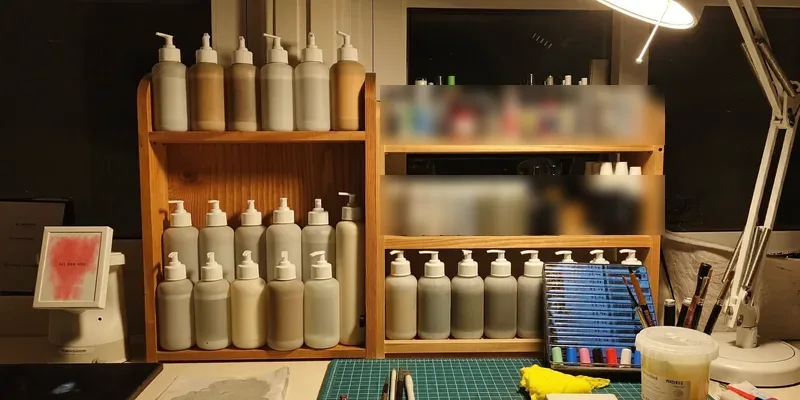
Racking is the single change that makes the biggest difference, because it converts a pile into an inventory. Dropper bottles stand best in stepped racks that let you read the labels from a seated position, and pots need either a stepped rack or a shallow drawer where you can see the lids.
Buy racks that match the bottles you actually own rather than a universal one that half fits everything. Most miniature ranges use a dropper bottle in a common size, and racks sold for that size hold them snugly instead of letting them rattle over.

Wall Racks Free Up the Table
If the table is shared and shallow, moving the paint vertically onto the wall behind it gives you back the whole depth of the surface. It only works where you can put screws in a wall, which rules it out for a lot of rented rooms, but where it works it is the cheapest space you will ever buy.
The Station Itself
The typical hobby station is a wooden or plastic tray with a raised back, brush holes along the edges, a drawer or two and a slot for a water pot. Its real job is being a boundary: everything inside it is yours, everything outside it is the dining table again, and cleanup is lifting one object.
Look for a lip around the edge so a knocked bottle does not run off onto the floor, and for holes sized to your tools rather than to fat craft brushes. Whether it is bamboo, MDF or plastic matters far less than whether it stows where you need it to.

Light Is the Upgrade People Delay Longest
Poor light is why colors look right on the table and wrong in daylight, and why fine work feels harder than it should. A clamp lamp with a daylight balanced bulb, positioned to the side and slightly in front, removes the shadow your own hand casts over the model you are working on.
Two smaller lamps beat one bright one, because a single source creates a hard shadow on the far side of the miniature. If you only run one, put it on the opposite side to your painting hand and raise it above eye level.

Portable Stations and Shared Tables
A portable station is a case that holds the paints, the tools and the work in progress, closes, and goes on a shelf. For anyone painting on a table that gets eaten three times a day, this is the format that keeps the hobby alive, and it travels to a club night without repacking.
The trade is capacity. A case that closes holds a working selection rather than a collection, so you keep the colors for the current project inside and the rest of the range on a rack elsewhere. That is a reasonable division rather than a compromise.

Which Format Suits Which Situation
The three common layouts solve different problems, and the right one depends almost entirely on whether the table is yours.
| Format | Suits | Footprint | Watch out for |
|---|---|---|---|
| Open tray station | A desk you control | Placemat sized, stays out | Collects dust between sessions |
| Wall rack plus bare desk | Small rooms, owned walls | Almost none on the table | Needs fixings, not for rentals |
| Closing portable case | Shared kitchen tables | Zero when stowed | Holds a project, not a collection |
| Drawer unit under desk | Large collections | Floor space, not table space | Out of sight means unused paint |
Where the Airbrush Fits Into the Layout
Three things need permanent homes: the brush itself between colors, the compressor somewhere it will not walk off the table when it vibrates, and the cleaning pot within reach of your spraying hand. Everything else can move around those three.
Keep the airbrush in a holder rather than laid on the mat, because a brush on its side lets paint creep back down the needle and out of the cup. If cleanup keeps sprawling across the whole table, our guide to cleaning an airbrush sets out the short version that fits on a station.
Frequently Asked Questions
Do I need a paint station or just a desk? A desk you never have to clear is a paint station already. Buy a station when the surface is shared, when the paint is currently in a box, or when setup time is what stops you painting. Otherwise spend the money on light and racking.
What kind of lamp should I use for miniature painting? A daylight balanced bulb on an adjustable arm, clamped to the table edge so it sits beside and above the model. Color temperature matters more than raw brightness, because paint mixed under a warm bulb looks different in the morning.
Can I airbrush at the same station where I brush paint? Yes, provided the spray has somewhere to go. That means a booth vented outside or an open window with the airflow moving away from you, following what the paint manufacturer states in its safety data sheet. Our airbrush ventilation guide covers the layout.
How should I store dropper bottles so the paint stays usable? Upright, out of direct sun, and where you can see them. Bottles you can see get shaken. Paint that separates for months is the most common reason a color suddenly sprays badly, which our miniature paint shaker guide gets into.
Is a wet water pot enough or do I need a cleaning pot for the airbrush? Different jobs. A water pot rinses brushes. An airbrush cleaning pot catches the spray and the solvent when you flush the brush, with a lid so the mist stays inside. If you airbrush at a shared table, the second one matters more.
The Bottom Line
Spend on racking and light before furniture, size the whole thing to the space you are genuinely allowed to keep, and choose between an open station and a closing case based on who else needs the table. A setup that stows in a minute gets used on the evenings you only have an hour, and those evenings are most of them. Read next: airbrush spray booth for the ventilation half of the bench, and airbrush paint for miniatures for what belongs on the rack.