Last updated: August 23, 2026
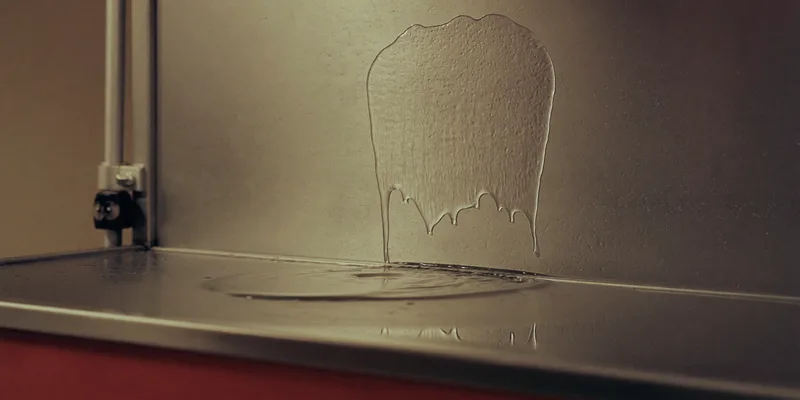
A sheet of water running down the back wall of a booth is a genuinely satisfying thing to spray into. The mist hits it and disappears, there is no mat slowly turning the color of your primer, and the whole thing looks like equipment rather than like a cardboard box with a computer fan taped to it. Searches for these have climbed sharply over the past year and the listings have multiplied to match.
Whether that is progress depends on what you were unhappy about. If you were tired of buying filter mats, a water curtain solves it. If you wanted less to think about, it hands you a different chore instead, and that chore has a smell if you ignore it.
This article contains affiliate links. If you buy through them, we may earn a commission at no extra cost to you. Learn more.
Quick Answer
What does a waterfall spray booth actually catch?
- Paint mist, by wetting it so it sinks into the water instead of passing through a mat.
- Not vapor. A water curtain traps particles, it does not remove solvent in the air.
- You trade buying filters for changing water, and water left standing between sessions goes off.
- The pump adds a constant background noise on top of the fan.
Bottom line: excellent for heavy acrylic sessions, a poor choice if you paint occasionally and put things away for weeks.
How a Water Curtain Works
A small pump lifts water from a reservoir in the base to a channel across the top of the back panel, and it runs down the panel as a continuous film. Paint mist drawn toward the back by the fan meets wet surface instead of dry filter, gets wetted, and is carried down into the reservoir where it settles out.
The idea comes from industrial finishing, where water wash booths have been standard for decades on exactly this principle. What the hobby versions have done is shrink it to a tabletop and add a pump you can run from a household outlet. VEVOR describes its waterfall model as shipping with the pump pre installed, so setup is connecting a hose and filling the reservoir.
Why Wet Beats Dry for Mist
A dry filter mat catches particles by intercepting them, so it gradually blocks and the airflow drops as it does. A water film catches them by wetting them, and the surface is renewed continuously by the flow. The capture rate does not decline through a session the way a loading mat does.
What It Does Not Do
It does not deal with anything that is a vapor rather than a droplet. Water traps the paint mist you can see, and solvent that has evaporated passes straight through and out with the air. That is not a flaw in the design, it is simply the boundary of what any particle capture method does.
For solvent based paints the governing document is the manufacturer’s safety data sheet. Tamiya’s sheet for its lacquer paint thinner instructs users to work only outdoors or in a well ventilated area and to keep the product away from heat, sparks and other ignition sources. A water curtain does not change that instruction. Our page on airbrush ventilation handles the air side.
The Maintenance You Are Signing Up For
Change the water. That is the whole routine and it is also the whole problem, because it is easy to finish a session, switch the pump off and forget the reservoir until next month. Paint loaded water sitting warm in a plastic tray does what any standing water does, and the smell arrives before the sight does.
Drain it after a heavy session or at the end of a week of painting, rinse the tray and the channel, and let both dry before packing up. If your booth stores away between sessions, empty it every time without exception, since a sealed unit with water in it is the worst case for both odor and growth.
Keeping the Channel Clear
The distribution channel across the top is a narrow slot and it silts up with dried paint at the edges, which turns an even sheet into two streams with a dry gap between them. A rinse and a wipe with a soft brush when you change the water keeps the film continuous, which is what the capture depends on.

Noise, Weight and Desk Space
You are adding a pump to a fan. The pump note is lower and more constant than the fan, and on a quiet evening in a house with someone asleep upstairs it is a second sound to account for. Some owners run the pump only while actually spraying rather than for the whole session.
Weight is the other change. A reservoir of water is heavy, which makes the booth stable while it is in use and awkward to move while it is full. Plan on emptying it before you shift it, and put the booth somewhere a spill would not reach a power strip.
Water Curtain Against the Alternatives
The honest comparison is against a filter booth of the same size, not against nothing. Both capture mist at the source, both need the air routed somewhere, and the difference is what you maintain and how the capture behaves over a long session.
| Approach | Running cost | Upkeep | Best suited to |
|---|---|---|---|
| Water curtain | Water and power | Drain, rinse, clear the channel | Long, frequent acrylic sessions |
| Filter mat booth | Replacement mats | Swap when loaded | Occasional painting, quick pack down |
| Mat plus pre filter | Cheap pads, fewer mats | Two things to check | Primer heavy work |
| Home built box | Whatever you chose | As designed | Odd sizes and fixed benches |

Who Should Buy One
Painters who spray a lot of acrylic, in long sessions, on a bench that stays set up. In that pattern the water curtain is quietly better than a mat: capture stays constant through the session, there is nothing to reorder, and draining the tray on a Sunday is a two minute job that fits the rhythm.
Painters who get the airbrush out once a month and pack everything away should buy a filter booth. Every advantage of the water curtain assumes the water is fresh and the unit is in regular use, and every disadvantage lands hardest on the person who leaves it standing. Our spray booth guide compares the mainstream filter units.

Frequently Asked Questions
Do you still need a filter in a waterfall spray booth? Many models keep a filter stage after the curtain as a second capture, and the listings describe it as dual filtration. Treat the water as the main stage and the mat as backup, and check the mat occasionally even though it will load far more slowly than in a dry booth.
What water do you put in it? Plain tap water is what the instructions call for on the hobby units. Some owners add a little dish soap to help the mist wet out. Do not add solvent based products to the reservoir, and read the paint’s safety data sheet before mixing anything into water you will then have to dispose of.
How do I get rid of the used water? Follow the disposal guidance in the section of the safety data sheet for the paint you have been spraying, and your local rules for paint waste. Paint loaded water is not the same as rinse water, and the amount of pigment in a reservoir after a heavy session is not trivial.
Is a waterfall booth quieter than a filter booth? No, it is one more motor. The fan noise is comparable and the pump adds a steady hum underneath it. If evening noise is your constraint, look at the compressor first, since that is usually the loudest thing on the table. Our guide to a quiet airbrush compressor covers it.
Can I use one with lacquer paints? The capture works on the mist either way, but the water does nothing about what evaporates, and the manufacturer’s safety data sheet still governs. Tamiya’s lacquer thinner sheet calls for working outdoors or in a well ventilated area and away from ignition sources. Vent outside and follow the sheet.
The Bottom Line
A water curtain swaps a consumable for a chore, and it is the better trade only if you paint often enough to keep the water fresh. Capture stays steady through a long session, nothing needs reordering, and the pump adds noise and weight you should plan for. What it does not do is change the ventilation question, which is set by the paint you spray and the safety data sheet that comes with it. Read next: choosing a filter booth instead and building your own.