Last updated: August 23, 2026
The moment that sells a spray booth is not a health scare. It is running a finger along the windowsill a few feet from where you paint and finding it faintly the color of your last primer. Overspray does not vanish. Whatever misses the model lands somewhere in the room, and in a house where the painting table is also the dining table, that matters to people other than you.
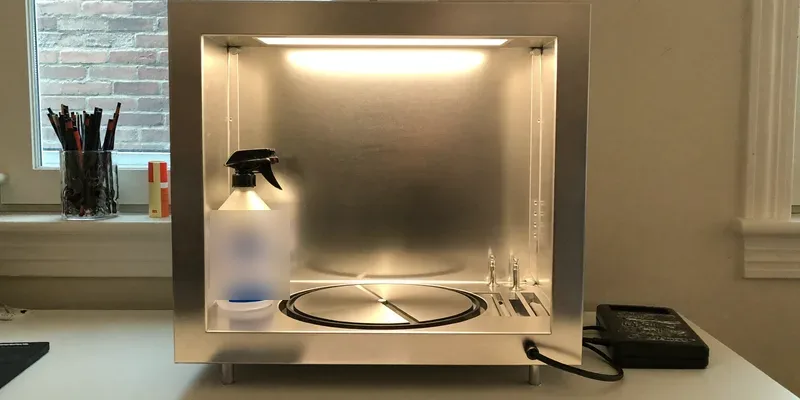
A booth is the one piece of workspace gear that changes the room rather than the model. It also gets bought in the wrong size more often than any other item in this hobby, because the listing photo never shows a hand holding an airbrush inside it.
This article contains affiliate links. If you buy through them, we may earn a commission at no extra cost to you. Learn more.
Quick Answer
Which airbrush spray booth size actually fits your table?
- Painting 28mm miniatures: a single fan tabletop booth is enough, and it needs to fold away.
- Painting 1/35 armor, 1/24 cars or terrain: measure the model plus your hand, then add room to turn it.
- Whatever the size, the hose has to reach a window or the booth is only collecting mist, not removing it.
- Filters are consumables. Budget for replacements from the start or the fan works against a clogged mat.
Bottom line: size for the biggest thing you paint plus your hand, and check the exhaust route before you check the fan rating.
What a Booth Does and What It Does Not
A booth pulls the air where you are spraying away from you and through a filter, then pushes it somewhere. That captures the paint mist you can see, keeps overspray off the surrounding room, and stops the fine dusting that otherwise settles on every other model on the shelf. It is a containment device.
What it is not is a substitute for ventilation. A booth that vents back into the same room has filtered the visible particles and returned the air. For anything solvent based, the manufacturer’s safety data sheet is the document that governs, and Tamiya’s sheet for its lacquer thinner instructs users to work only outdoors or in a well ventilated area. Our page on airbrush ventilation deals with that side properly.
Booth or Open Window
Both, ideally. A booth captures at the source, which is far more effective than any amount of room air movement, and the window is what gets the captured air out. Choosing one over the other is the mistake, because they do different halves of the same job.
Sizing It for What You Actually Paint
Measure the largest model you paint, then add the space your hand and the brush occupy beside it, then add room to rotate the model without knocking the sides. That total, not the model size, is the working area you need. Most people who report a booth as too small bought for the model alone.
For 28mm and 32mm figures a compact tabletop booth is genuinely adequate, and the turntable does most of the rotating for you. For 1/35 armor, 1/48 aircraft with the wings on, or terrain pieces, you want the larger class of booth or the type that combines two units side by side.
The Numbers on the Listings
The Master Airbrush portable booth listing specifies a working area of 16.5 by 19 by 13.5 inches with a 25 watt fan and a 7.5 inch turntable, which is representative of the mainstream tabletop class. VEVOR lists dual fan models with airflow figures stated in cubic meters per minute rather than in the units the American listings usually use, so compare like with like before concluding one is stronger.

The Exhaust Route Decides Everything
A booth without a route to the outside is a filter box. It will still keep overspray off the room, which is worth having, but the air that goes through it comes back to you. The hose is therefore not an accessory, it is the part that determines whether the booth is doing the whole job.
Before buying, work out where the hose goes. A window a few feet away is ideal. Master lists an extension hose of around five and a half to six feet depending on the version, which sets a real limit on how far the booth can sit from the opening. If your window is across the room, plan for a longer duct rather than hoping.

Single Fan, Dual Fan or Water Curtain
Three approaches exist in the hobby price range and they suit different painting. A single fan tabletop unit is quiet, light and enough for figures. Dual fan units move more air across a wider opening, which is what larger models need. A water curtain traps mist in flowing water instead of a filter mat.
| Type | Suits | Upkeep | Watch out for |
|---|---|---|---|
| Single fan tabletop | 28mm figures, small kits | Filter mat swaps | Too shallow for wings and hulls |
| Dual fan | 1/35 armor, terrain, batches | Filter mats, more of them | Louder, needs more desk |
| Water curtain | Heavy sessions, less filter buying | Change and clean the water | Standing water if left between sessions |
| Home built box | Odd sizes, permanent bench | Whatever you designed in | Fan choice matters, see the build guide |

Filters Are Consumables
The filter mat is what actually catches the paint, and it loads up. A clogged mat means the fan is straining against resistance and pulling less air through the opening, which is the point at which people conclude the booth was never any good. It usually was, three filters ago.
Check the mat every few sessions and replace it when it is visibly loaded, or sooner if you spray a lot of primer. Some owners fit a cheap furnace filter pad cut to size as a pre filter in front of the original, which catches the bulk and makes the proper filter last longer. Keep spares in the drawer.

Living With One on a Shared Table
If the painting table is also the dining table, the folding models are the only ones that work. The mainstream tabletop booths collapse to a flat case, which means the setup ritual is short enough that you actually paint on a weeknight rather than deciding it is not worth unpacking.
Noise is the other household factor. A booth fan and a compressor running together is a real sound in a quiet house, and it is worth pairing the booth with a compressor chosen for noise if you paint in the evening. Our guide to a quiet airbrush compressor covers that half.

Frequently Asked Questions
Do I need a spray booth for acrylic miniature paints? You do not have to have one to paint, but overspray still lands somewhere, and a booth is what keeps it off the rest of the room. Follow the handling instructions on the paint’s safety data sheet either way. Vallejo’s sheet for Model Air lists a particle filter mask under personal protection even though the product is not classified as hazardous.
Can I vent a spray booth into the room? It will still contain overspray, which is most of the point on a shared table, but the air comes back to you. For anything solvent based follow the safety data sheet for that product, which for lacquer thinners means working outdoors or in a well ventilated area. Venting outside is always the better arrangement.
What size booth do I need for 1/35 scale? Larger than the tabletop class most figure painters buy. Measure the hull with the turret on, add the width of your hand holding the brush at an angle, and add turning room. If the result is close to the stated working area, go a size up rather than hoping.
How often do I change the filter? When it is visibly loaded, which for a regular painter tends to be every several sessions and faster if you spray primer. A quick look every few sessions is enough. A booth that suddenly seems weak is nearly always telling you the mat is full.
Is a folding booth strong enough to be worth it? For figure and small kit work, yes, and the fact that it folds is what makes it get used. The trade is depth: folding units are shallow, so larger models sit half out of the opening where the fan cannot help. Our page on the portable spray booth goes through the compromises.
The Bottom Line
Size the booth for your largest model plus your hand plus turning room, work out the hose route to a window before you buy, and treat filters as a running cost rather than a part. A folding tabletop unit is the right answer for most figure painters and the wrong one for anybody building armor or terrain. Read next: how a water curtain compares to a filter and building your own booth safely.